Guide · Popterror Studio
How long does it take to make a custom figure? Lead times step by step
 By Romain Czysz, 3D artist, co-founder of PopterrorPublished Updated Reading time: 4 min
The short answer
Making a figure in series takes several months, because the steps follow one another: design, 3D modelling, prototype, moulds, pre-production sample, production, quality control, testing and shipping. Typical total lead time, from brief to delivery: 6 to 8 months for an existing character, 7 to 9 months if it also has to be created. Sea freight and sample approvals are the steps that weigh most.
“We need them for next month’s trade show.” It is the sentence no studio likes to hear, because a figure produced in series is not made in a few weeks. In this guide, we detail each step, what makes it longer, and how to build a realistic schedule to hit your launch date.
Why does it take several months to make a figure?
Because the steps are sequential: you cannot make a mould before approving the prototype, or start production before approving the pre-production sample. And several steps involve back-and-forth: each correction restarts a cycle of making and shipping a sample.
On top of that come shipping, often long, and safety testing, which has its own lead time.
How long does each step take?
| Step | What happens | Typical duration | What makes it longer |
|---|---|---|---|
| Brief and design | Directions, sketches, turnaround | 2 to 4 weeks | Character created from scratch, many rounds |
| 3D modelling | Production volume | 2 weeks | Complex character, many parts |
| Prototype | 3D print, corrections | 3 days of printing, plus corrections | Several versions to test |
| Moulds | Tooling | 1 month | Steel injection, large size |
| Pre-production | First “factory” sample | 2 weeks | Paint or mould corrections |
| Production | Moulding, painting, assembly | 1 month | Large quantity, many colours |
| Inspection and packing | Checks, boxing | 2 weeks | Blind box (distributing the models) |
| Safety testing | Laboratory | Included in quality control | Several materials and colours |
| Shipping | Sea or air, customs | 6 to 8 weeks by sea, 10 to 15 days by air | Sea freight, peak season |
Usual total, including approval rounds and sea freight: 6 to 8 months for an existing character, 7 to 9 months if the character has to be created or for a blind box. Some steps can overlap: packaging is designed while the moulds are being made, and testing can start on the pre-production sample.
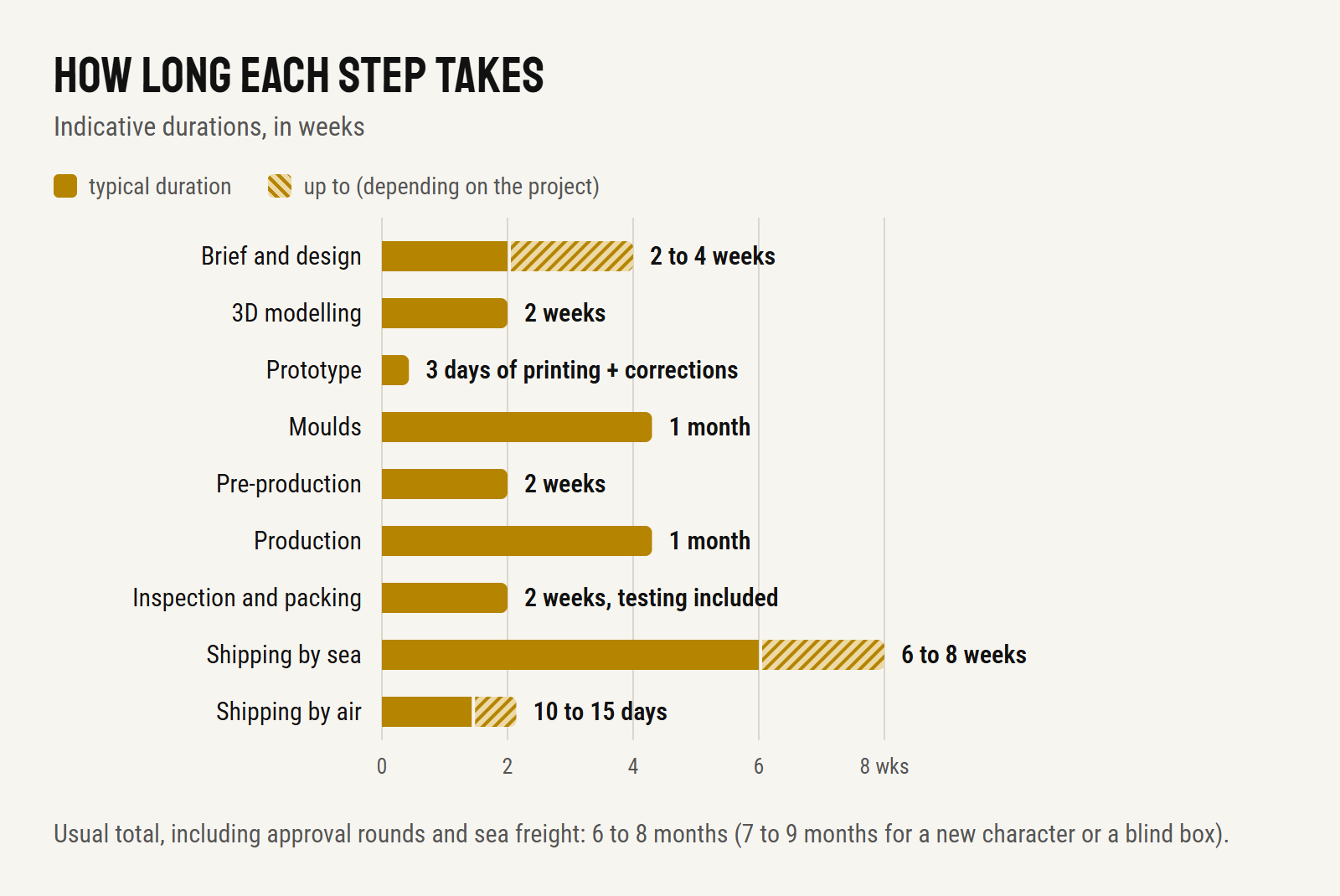
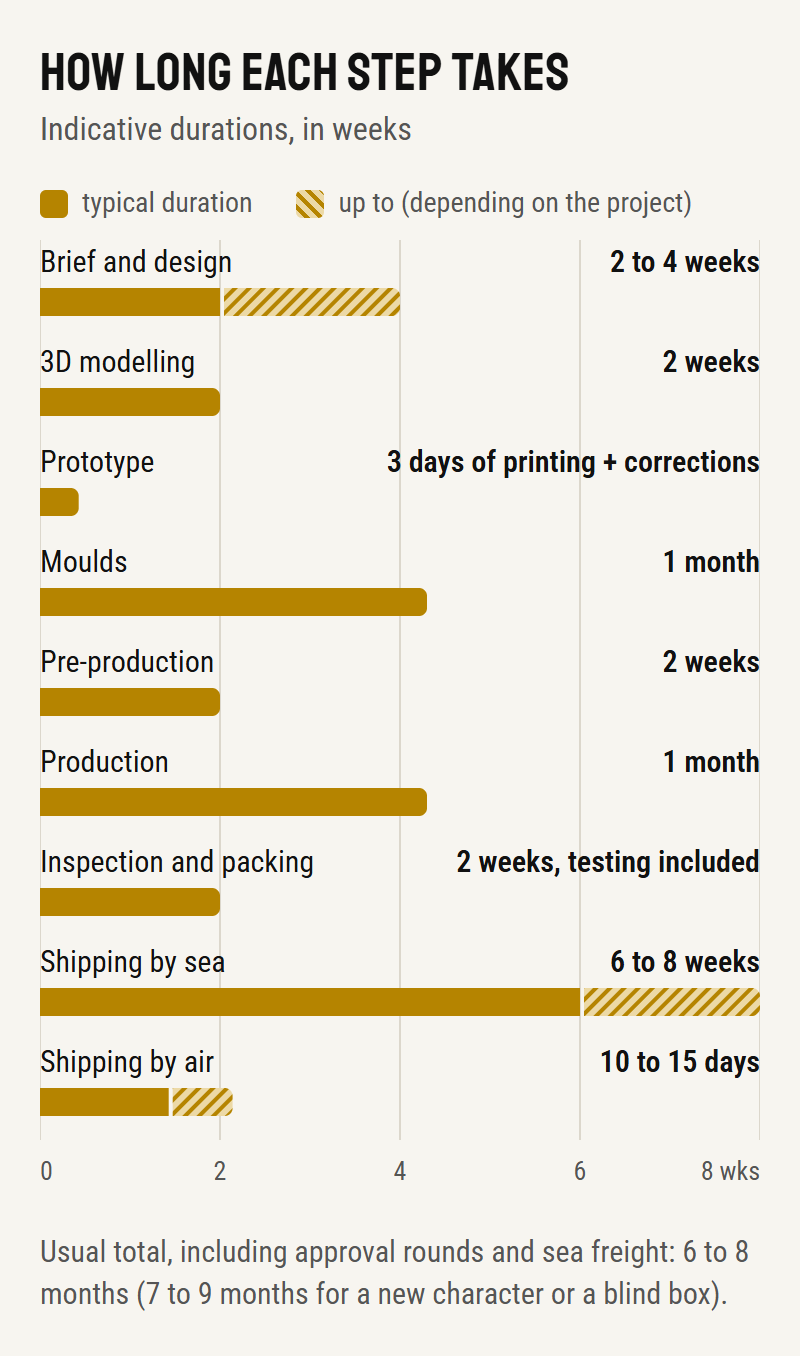
The typical duration of each step, from brief to delivery.
What saves time?
- Starting from a production-ready 3D file: you skip the design step and part of the modelling.
- A precise brief from the start: fewer rounds on the sketches.
- Quick approvals: every day waiting for an answer is a day of delay on delivery.
- A reduced colour palette: less paint set-up.
- Air freight for part of the production, if your budget allows: for example, a few cartons by air for an event, the rest by sea.
What wastes time?
- Changing the design after the prototype, or worse, after the moulds.
- Approving without a pre-production sample, then discovering a defect on arrival.
- Forgetting the packaging, which has its own printing lead times.
- Ignoring the factory calendar: around Chinese New Year, many factories close for several weeks.
- Forgetting safety testing, mandatory if the figure is a toy.
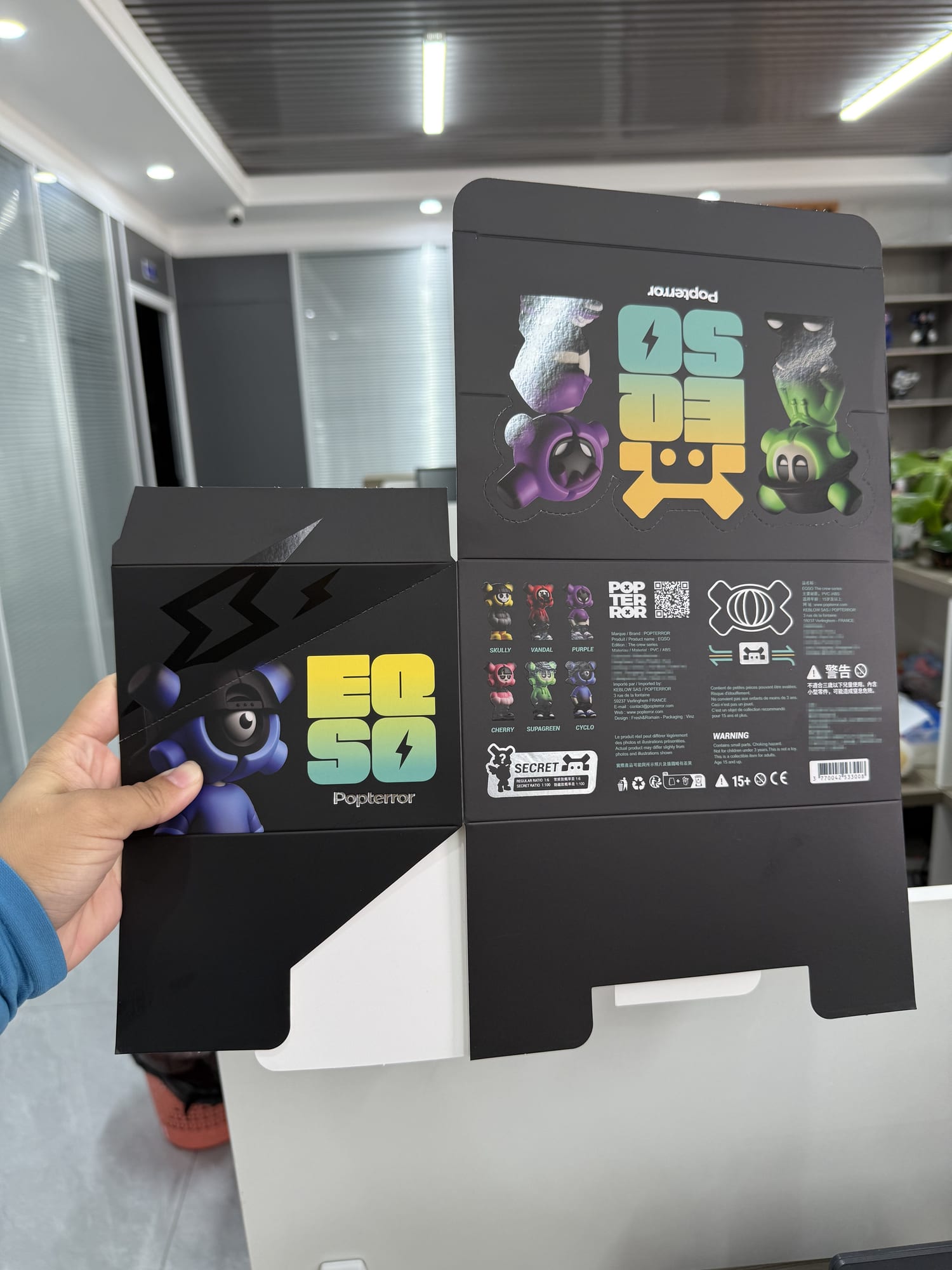
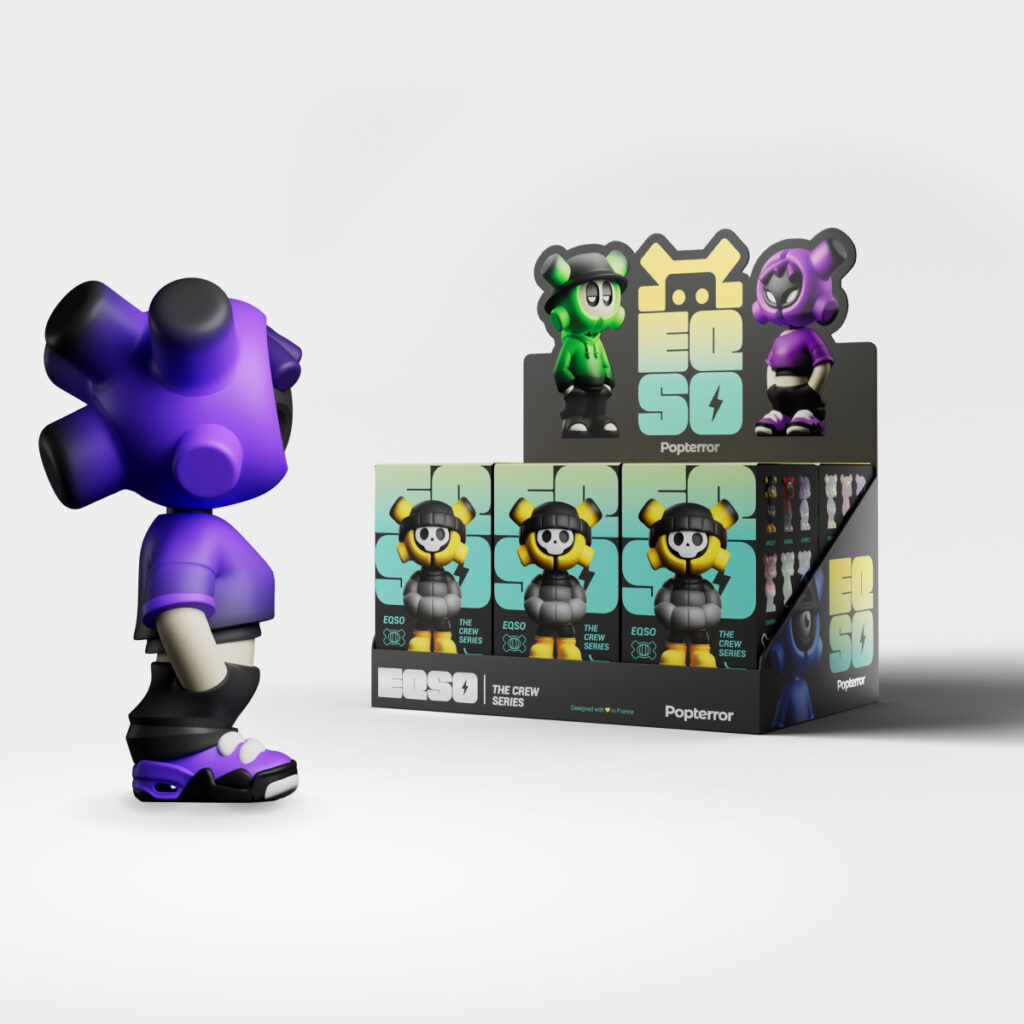
The EQSO The Crew blind box display, printed and still flat: packaging has its own printing lead times.
How do you build a realistic schedule?
Start from your launch date and work backwards:
- Launch date (trade show, store release, event).
- Minus a safety margin for receiving and setting up.
- Minus the chosen shipping time.
- Minus production, inspection and packing.
- Minus the pre-production sample and the moulds.
- Minus the prototype, the 3D and the design.
If the result falls in the past, you need to adjust: start from an existing design, simplify, choose air freight or move the date. Better to know at the start of the project than at the end.
What does a typical schedule look like?
Here, as an illustration, is the order of milestones for a figure project that starts from an existing character. Actual durations are set with us according to your project.
- Starting week: brief, sending existing files or drawings.
- 3D model approval: about 2 weeks after the brief.
- Prototype approval: a few days later (3 days of printing), plus time for corrections.
- Pre-production sample approval: about 6 weeks after the moulds are launched (1 month of moulds, 2 weeks for the sample).
- End of production: about 1 month after the pre-production sample is approved, then 2 weeks of quality control and boxing.
- Cartons arrive: 6 to 8 weeks later by sea, 10 to 15 days by air.
At each milestone, a specific deliverable is approved in writing: that is what keeps the schedule on track and avoids bad surprises at the end.
What happens during production?
While the factory moulds, paints and assembles, work continues on your side: preparing the launch, photos and visuals (often from the pre-production sample), putting product pages online, organising receipt and storage. It is time to make the most of, not dead time.
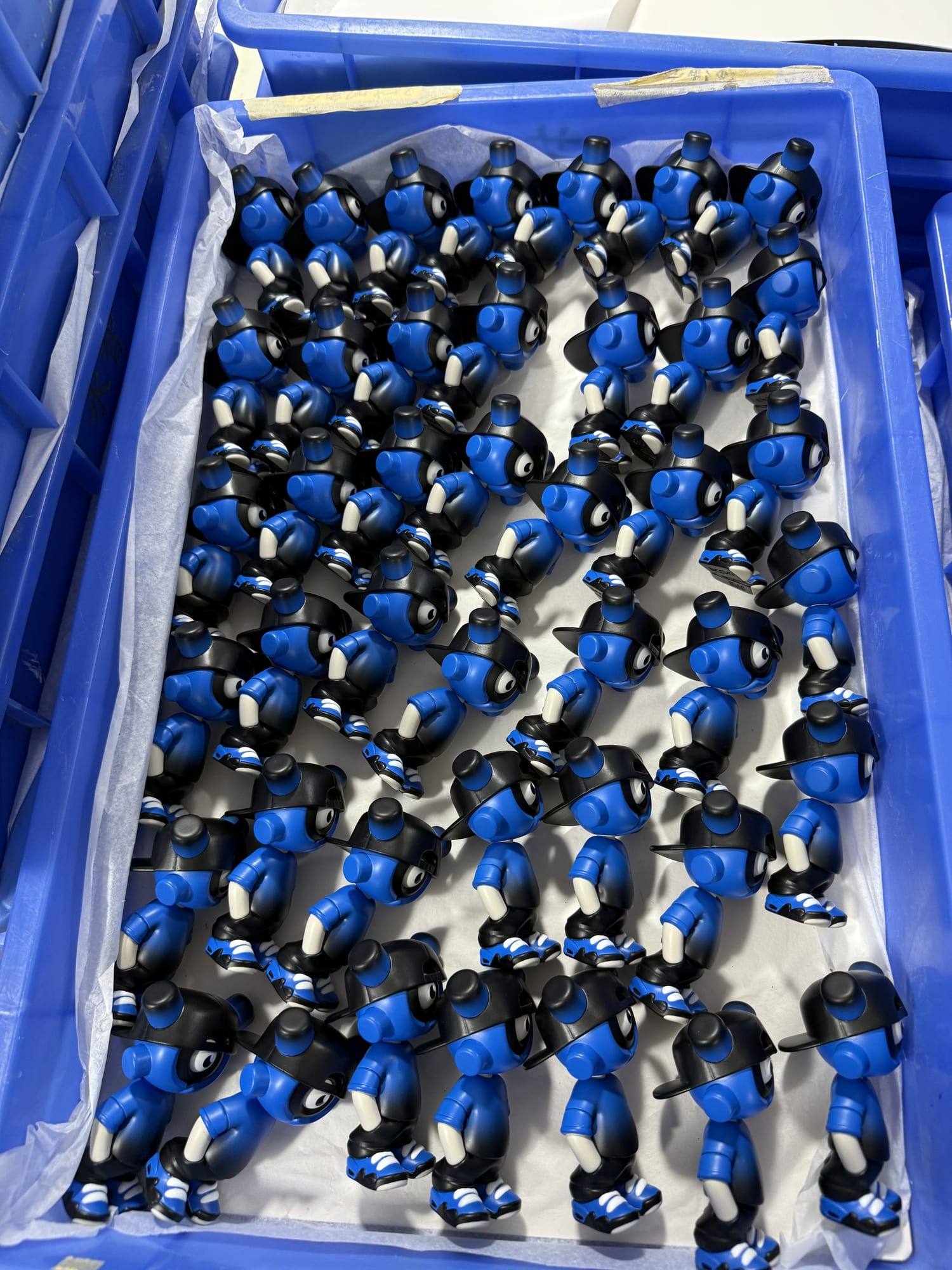
While the factory moulds, paints and assembles: a tray of EQSO The Crew figures in our partner factory.
What about a blind box or a collector’s edition?
A blind box multiplies some steps by the number of characters (design, 3D, prototypes, moulds) and adds the distribution of models to the packing: the lead time is longer than for a single figure. See our guide on how to make a blind box.
A collector’s edition often needs more care on packaging and finishes, and sometimes numbering: allow time to approve each element.
Our advice
Contact your studio as early as possible, even if your project is not fully defined: a first conversation makes it possible to set a realistic schedule and spot the steps that can be sped up. To put these lead times in the context of the whole process, read our guide on how to make custom figures, and discover our custom figure manufacturing service as well as all our custom figure design and production services for brands.
Frequently asked questions
How long does it take to make a custom figure?
From brief to delivery, allow 6 to 8 months for an existing character, and 7 to 9 months if it also has to be created. The lead time depends mainly on the starting point (existing character or one to create), the number of sample rounds and the shipping method.
Can a figure be produced in a rush?
Some steps can be shortened: starting from a ready 3D file, limiting colours, choosing air freight. But moulds and production have minimum durations. The earlier you contact us, the more room there is.
Which step takes the longest?
Often sea freight and the back-and-forth on samples. Mould making is also a long step, especially for steel injection moulds.
Does Chinese New Year have an impact?
Yes, many factories close for several weeks around Chinese New Year, and they restart gradually. Any schedule that runs through the start of the year has to take it into account.
How long for a blind box?
Longer than a single figure, because each character goes through design, 3D, prototype and moulds. Typical lead time: 7 to 9 months, from brief to delivery.
Related guides
Read next
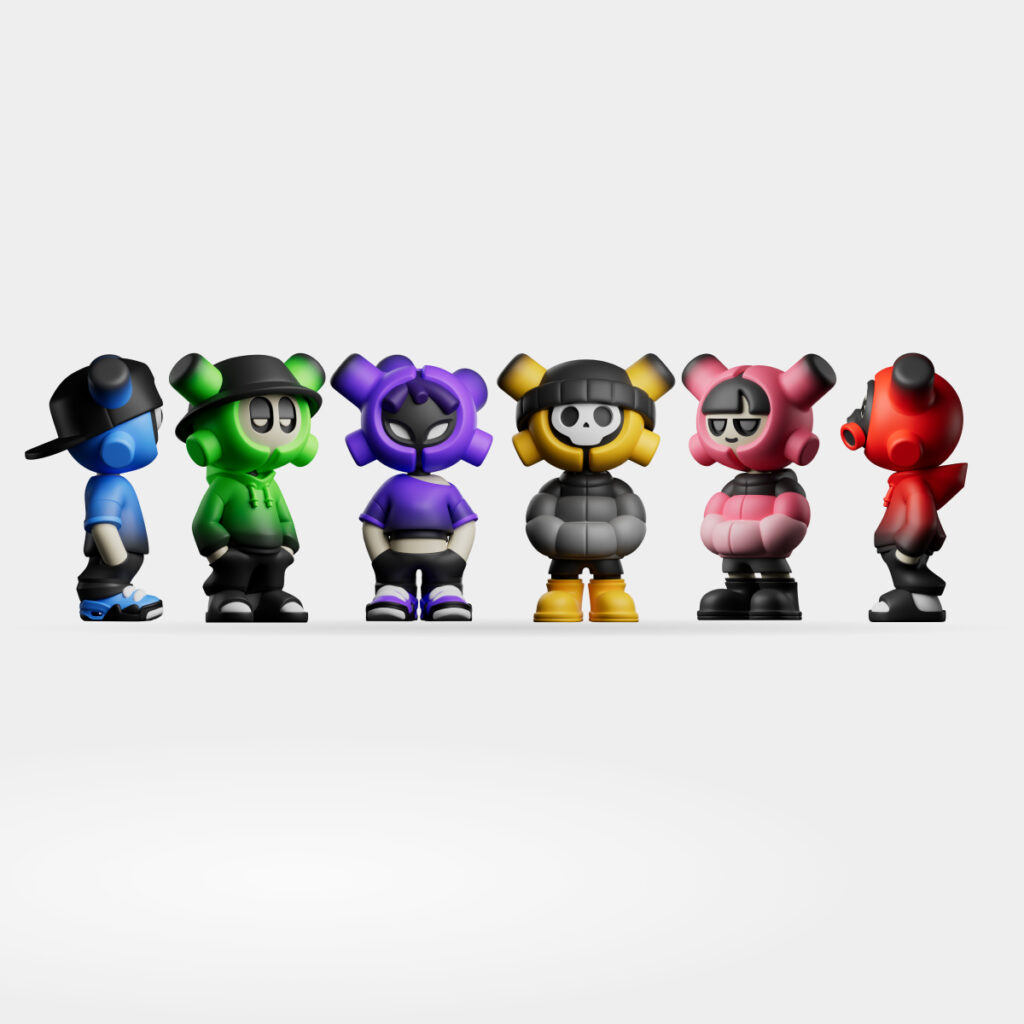
How to make custom figures: the complete guide, from idea to factory
How to make custom figures in series: character design, 3D modelling, prototype, materials, moulds, production, quality control, packaging and shipping.
Manufacturing figures in China or Europe: an honest comparison
Should you manufacture figures in China or Europe? Know-how, prices, quantities, lead times, shipping, duties and quality control: a studio’s honest view.
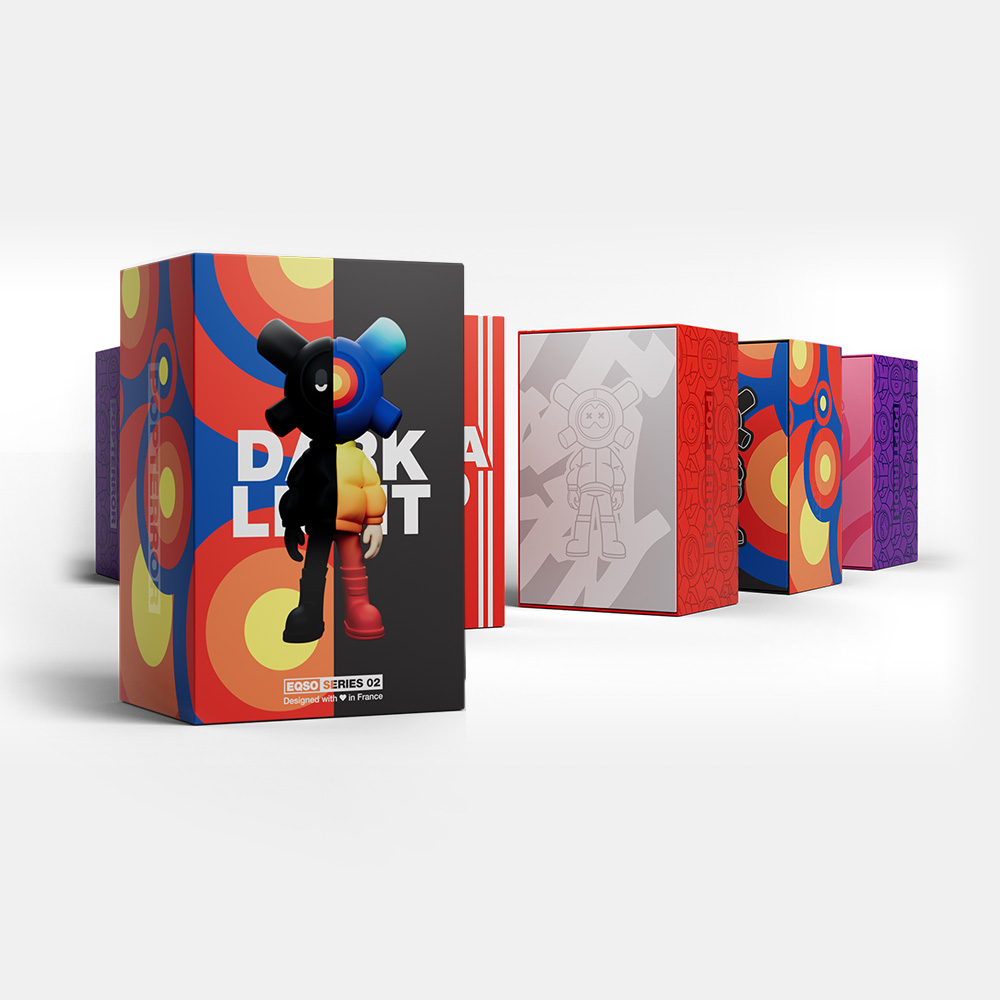
How much does it cost to make a custom figure? Every cost explained
Custom figure cost explained: fixed costs (design, 3D, moulds), cost per piece, how quantity changes the unit price, and tips to keep your budget in check.