Guide · Popterror Studio
How to create a brand mascot that lasts (and sells)
 By Fred, graphic designer and art director, co-founder of PopterrorPublished Updated Reading time: 4 min
The short answer
To create a brand mascot, start from your values and your audience, give the character a clear personality, then work on a simple, recognisable silhouette that can be used in many expressions and formats. Formalise it all in a character sheet, a turnaround (front, side, back) and usage guidelines. A mascot designed in volume from the start can also become a figure.
A good mascot is a shortcut to your brand: people see it, smile and remember. But a failed mascot quickly ends up forgotten at the back of a brand book. This guide explains how to create a character that truly embodies your brand, lives on all your channels, and can even become a collectible.
Why create a brand mascot?
A mascot gives a brand a face. It helps you:
- humanise your communication: a character speaks more easily than a logo;
- stand out in a sector where everyone looks the same;
- build attachment, especially with communities and younger audiences;
- extend the brand to every channel: social media, packaging, stands, videos, merchandise.
And when it works, the mascot can become a product: figure, blind box, collector’s edition.
Which questions should you ask before drawing?
- What are the brand’s values? Boldness, kindness, humour, technical excellence…
- Who is the audience? Children, families, professionals, enthusiasts?
- Where will the mascot live? Screens, packaging, events, figures, animation.
- What role in your communication? Main character or simple signature?
- How long should it last? One campaign, or several years of branding?
These answers form the brief. They guide every design decision.
How do you give your mascot a personality?
A memorable mascot has a story and a character. For EQSO, we started from a simple idea: an inhabitant of planet XO, where everything is grey and sad, who discovers our pop culture and thinks it is seriously cool. This story guides his posture, his outfits, his colours and the tone of our copy.
Ask yourself: how does your character speak? What does it love? What makes it unique? A few personality traits are enough, as long as they are clear.
What are the rules of good mascot design?
| Rule | Why | How to check it |
|---|---|---|
| Recognisable silhouette | People must identify the mascot even as a shadow | Fill the drawing in black |
| Simple shapes | It must stay readable at small sizes (favicon, sticker) | Shrink it to the size of a stamp |
| Limited palette | Easier to reproduce and remember | Test it with very few colours |
| Clear expressions | It must convey emotions | Draw a series of expressions |
| Designed in volume | So it can become a figure | Draw the turnaround: front, side, back |
On that last point, many projects stop too early: a mascot designed only in 2D can be very hard to turn into a figure. By designing it from every angle from the start, you keep every door open.
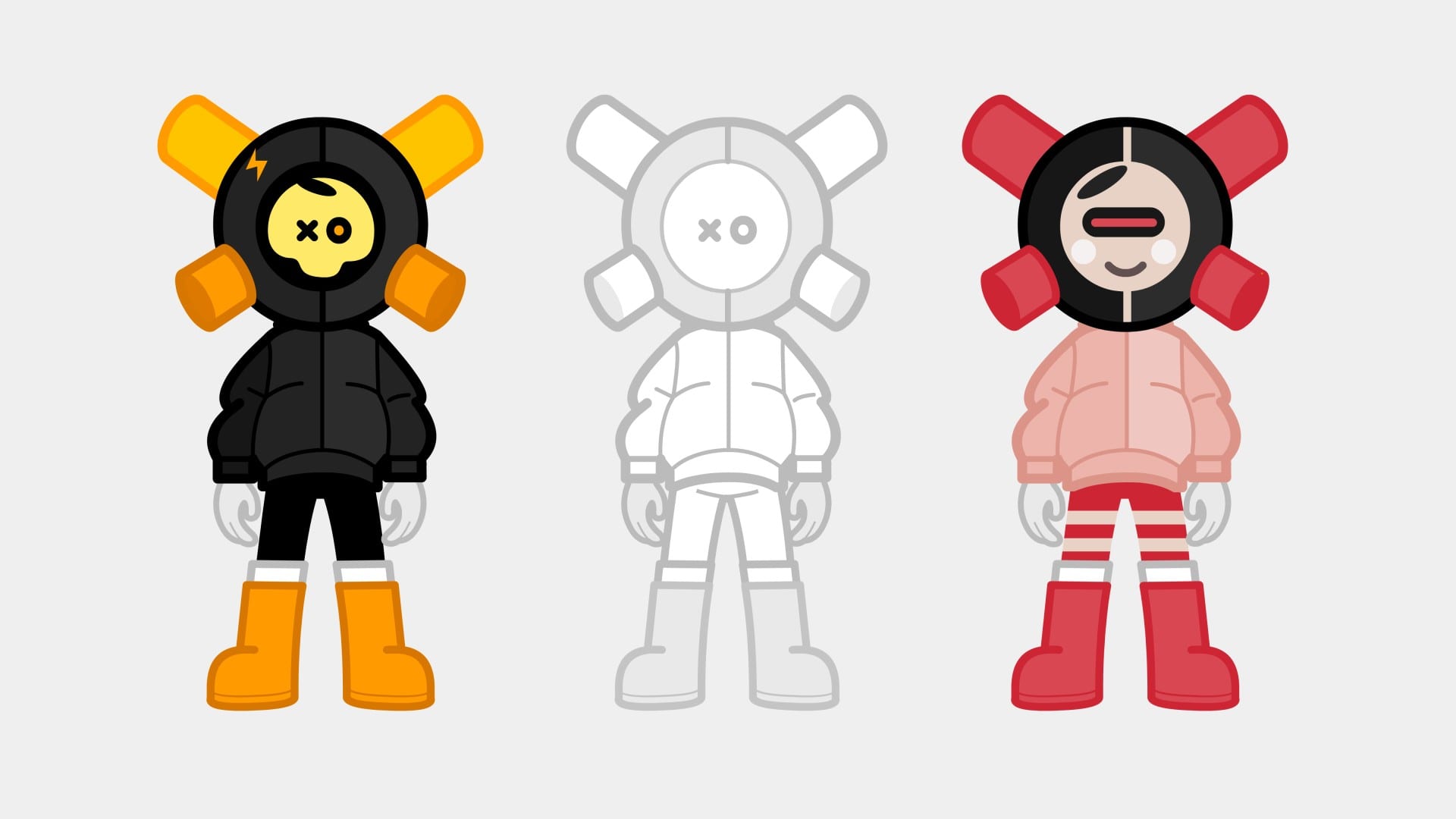
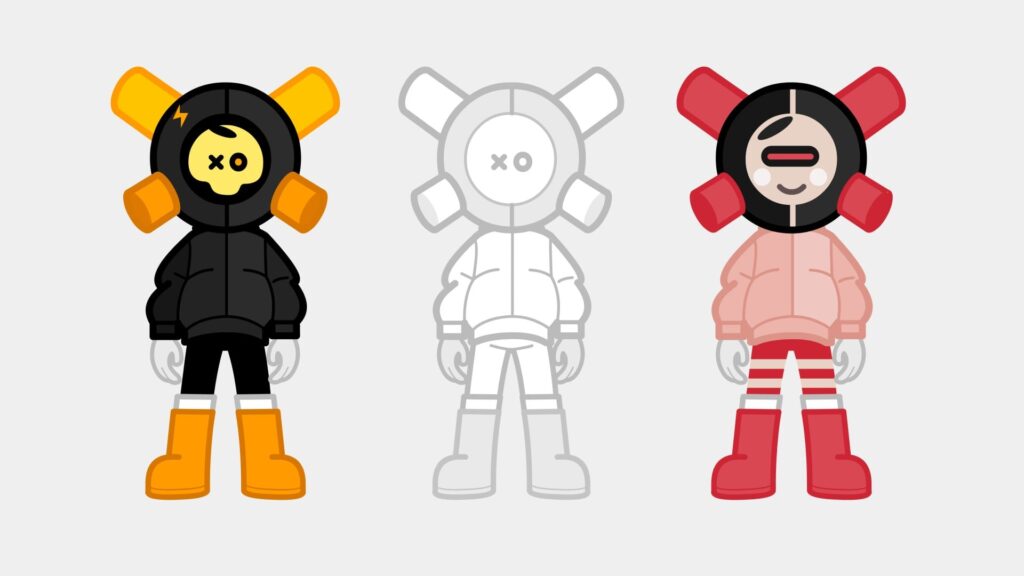
2D drawings of EQSO: a recognisable silhouette and simple shapes that are easy to rework in other colours.
Which deliverables should you ask for?
- The character sheet: the full-length mascot, its colours and details.
- The turnaround: front, side and back views.
- Expressions: joy, surprise, anger, thinking…
- Key poses for your main uses.
- Usage guidelines: dos and don’ts, minimum sizes, reference colours, allowed backgrounds.
- Source files (vector, and 3D if possible).
What do successful company mascots have in common?
Without naming anyone, look at the mascots that have lasted for decades in food, tyres, breakfast cereals or sport: they all share a simple silhouette, a dominant colour, a consistent personality and a regular presence in the brand’s communication. They evolve over time but stay recognisable. That is the sign of a well-built character.
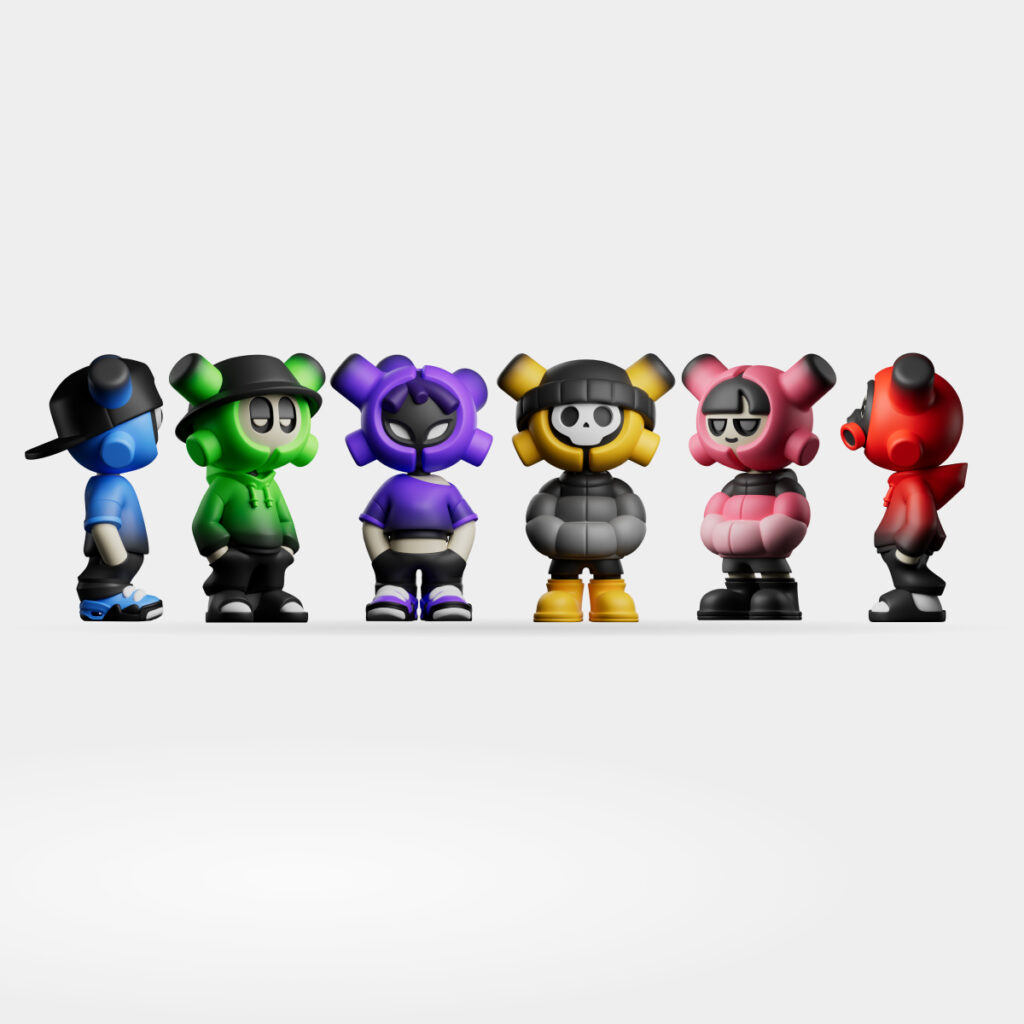
In the world of art toys and designer toys, characters show another path: minimalist shapes, a deliberately neutral emotion, and an ability to be reinvented endlessly in colours and collaborations. That is the approach we chose for EQSO.
Which mistakes should you avoid?
- Too much detail: unreadable at small sizes, complicated to animate and to manufacture.
- Copying the codes of another character: legal risk and loss of identity.
- No usage guidelines: every agency reinterprets the character, which ends up diluted.
- A mascot designed only in 2D, when one day you will want to turn it into an object.
- Giving up too soon: a mascot grows stronger through repetition.
How do you bring your mascot to life after it is created?
A mascot does not win people over in a day: it grows stronger with every appearance. A few ideas to bring it to life:
- On social media: give it a voice, reactions to brand news, regular appointments.
- On packaging: a nod on every product, a different expression for each range.
- In physical spaces: stands, shop windows, events, where a large piece in volume catches the eye.
- As objects: stickers, posters, then figures and collector’s editions for fans.
- In animation: a few seconds of animation are often enough to make a character endearing. That is why we built a specialised 3D animation studio, which produces content to bring mascots to life on social media and in advertising.
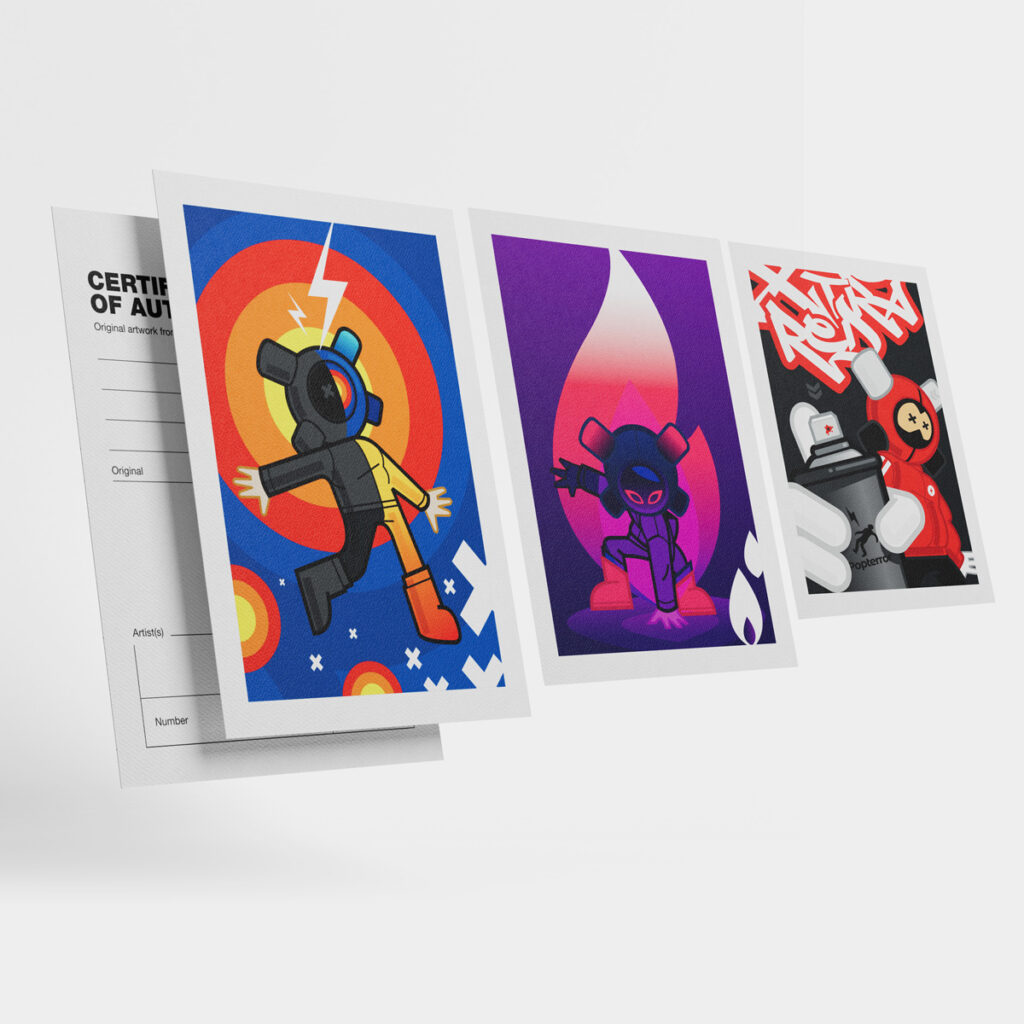
For EQSO, we followed exactly this path: a character drawn, then modelled, then turned into art toys, a blind box, posters, large sculptures and collaborations with other artists.
What comes next?
Once your mascot is created, it can come to life in volume. We explain how in our guide on how to turn your mascot into a figure. To create yours with a studio that goes from sketch to object, discover our custom mascot design service and all our custom figure design and production services for brands.
Frequently asked questions
Why create a mascot for your company?
A mascot makes a brand more human, more memorable and easier to bring to life on social media, in stores or at events. It can also become a product in its own right: figure, plush, blind box.
How much does it cost to create a mascot?
It all depends on the number of directions explored, the variations and the deliverables (2D, 3D, figure). At Popterror Studio, each mascot project gets a tailored quote.
How long does it take to create a mascot?
From a few weeks to a few months, depending on complexity and the number of feedback rounds. At Popterror Studio, allow 4 to 6 weeks from brief to final files.
Should a mascot be a human, an animal or an imaginary creature?
All three work. An imaginary character (like our EQSO, from planet XO) gives more freedom and avoids comparisons; an animal or an animated object builds on references the audience understands immediately.
Can you register your mascot as a trademark?
Yes, a character can be protected by copyright and registered as a figurative (design) trademark. Check availability first and get help from an intellectual property lawyer or trademark attorney.
Related guides
Read next
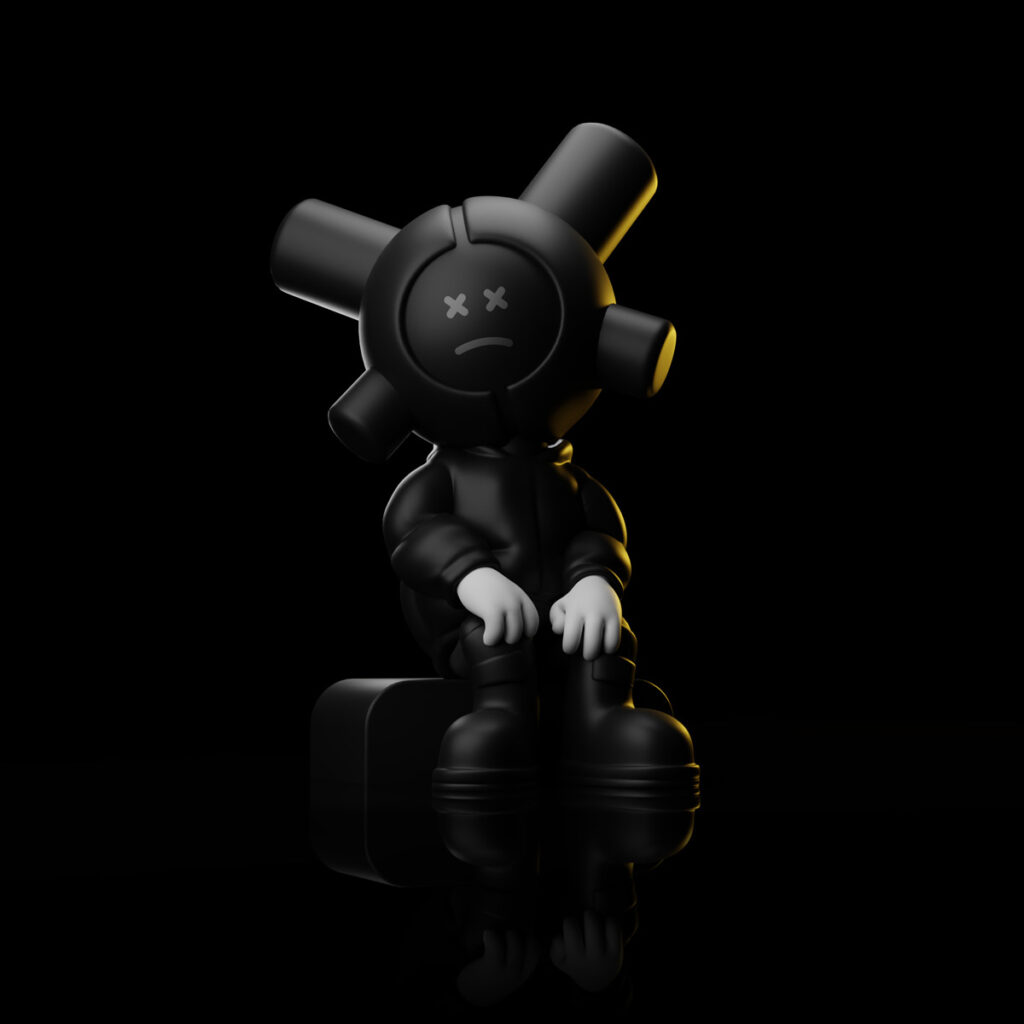
Turn your mascot into a figure: from 2D drawing to object
Turn your mascot into a custom figure: adapting the drawing to volume, 3D, prototype, material and packaging. Make your mascot premium merch people keep.
How to make custom figures: the complete guide, from idea to factory
How to make custom figures in series: character design, 3D modelling, prototype, materials, moulds, production, quality control, packaging and shipping.
Premium brands and collectible figures: why art toys appeal to luxury
Why premium and luxury brands invest in collectible figures and art toys: scarcity, drops, artist collaborations, packaging and storytelling.