Guide · Popterror Studio
Turn your mascot into a figure: from 2D drawing to object
 By Fred, graphic designer and art director, co-founder of PopterrorPublished Updated Reading time: 4 min
The short answer
To turn a mascot into a figure, you first adapt it to volume (a front, side and back turnaround), then model it in 3D with manufacturing constraints in mind, approve a 3D-printed prototype, choose the material based on the quantity, and design packaging that lives up to it. Done well, it turns an animated logo into an object people keep, far stronger than ordinary promotional merchandise.
Your mascot lives on your screens, your packaging and your social media. What if it also lived on your customers’ desks and shelves? Turning a mascot into a figure means going from an image to an object people touch, give and keep. Here is how to make the move from 2D to volume a success.
Why make a figure of your mascot?
Because an object creates a bond that an image does not. A well-made figure:
- gets kept: unlike a lot of promotional items, it stays in sight, on a desk or a shelf;
- gets collected, especially if you turn it into a series;
- sells: a desirable piece of merchandise can become a source of revenue and visibility;
- tells your brand’s story at your events, in your stores and in your customer gifts.
That is what makes it premium branded merchandise, the opposite of the promotional item people forget.
Step 1: adapt the drawing to volume
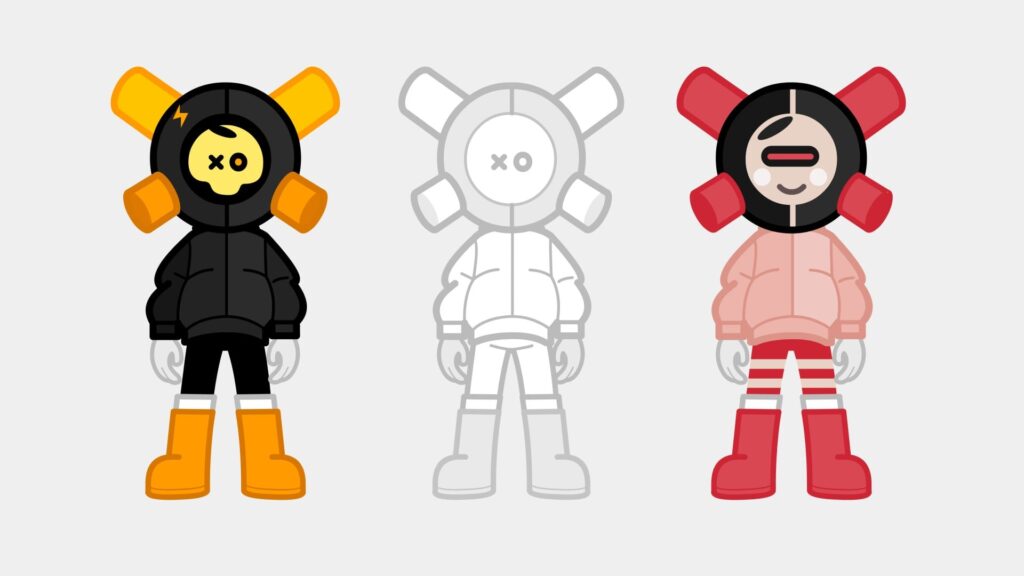
Most mascots are drawn from the front or three-quarter view. For a figure, you need to know what the character looks like from every angle. The designer therefore produces a turnaround: front, side and back views.
It is also the moment to make choices:
- simplify details that are too fine to survive moulding;
- thicken fragile elements (antennae, fingers, accessories);
- stabilise the pose so the figure stands up;
- translate 2D effects (shadows, highlights) into volumes and colours.
The goal is for your audience to recognise their mascot instantly, while getting a solid object that can be manufactured.
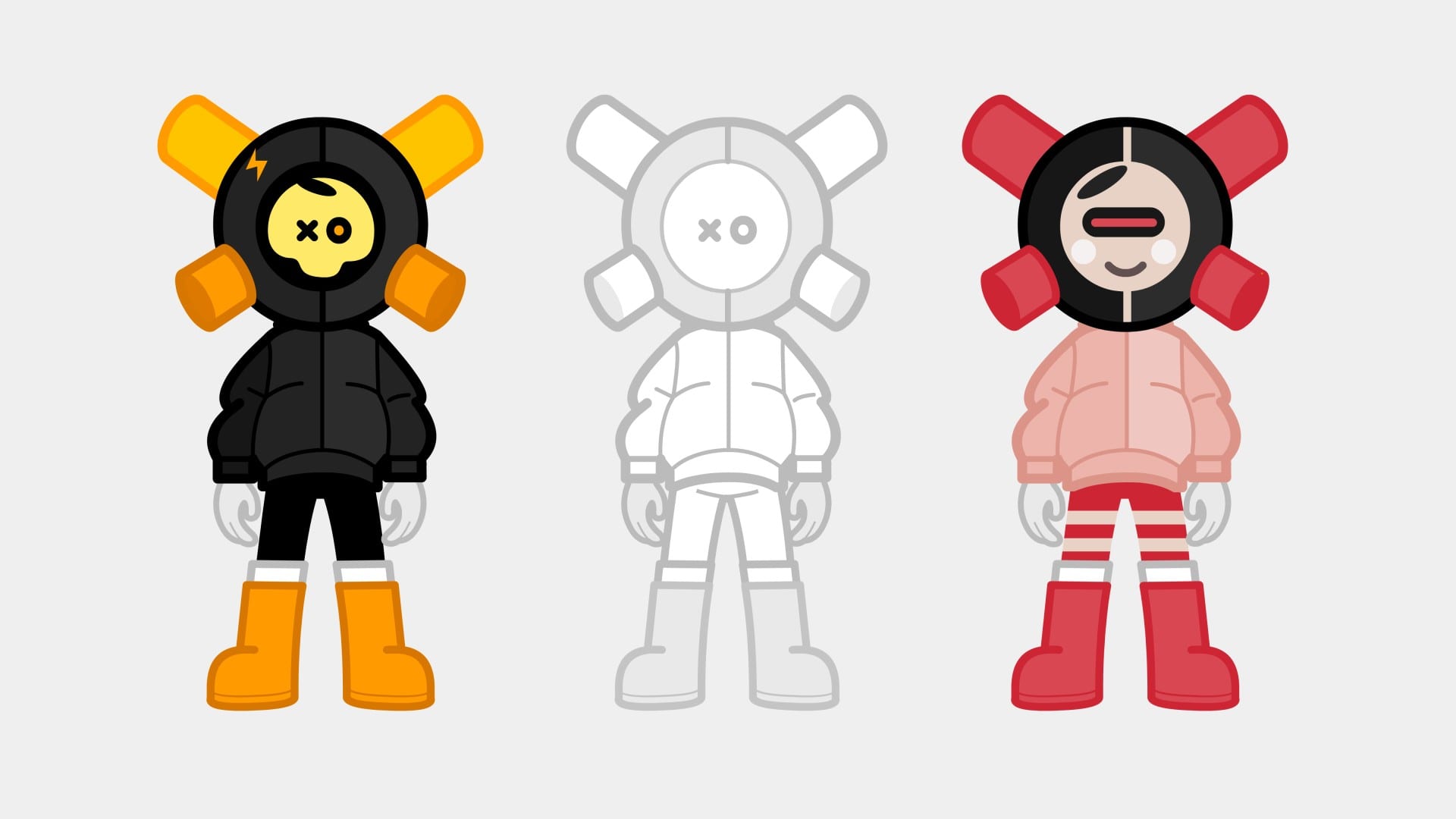
Front-view 2D drawings of EQSO: to move to volume, you also need the side and the back.
Step 2: 3D modelling
The 3D model turns the turnaround into a volume. For a production figure, the modeller plans part splitting, wall thickness and the undercuts to avoid from the start. It is a particular skill: a 3D model made for animation is not necessarily manufacturable. All the details are in our guide on how to make custom figures.
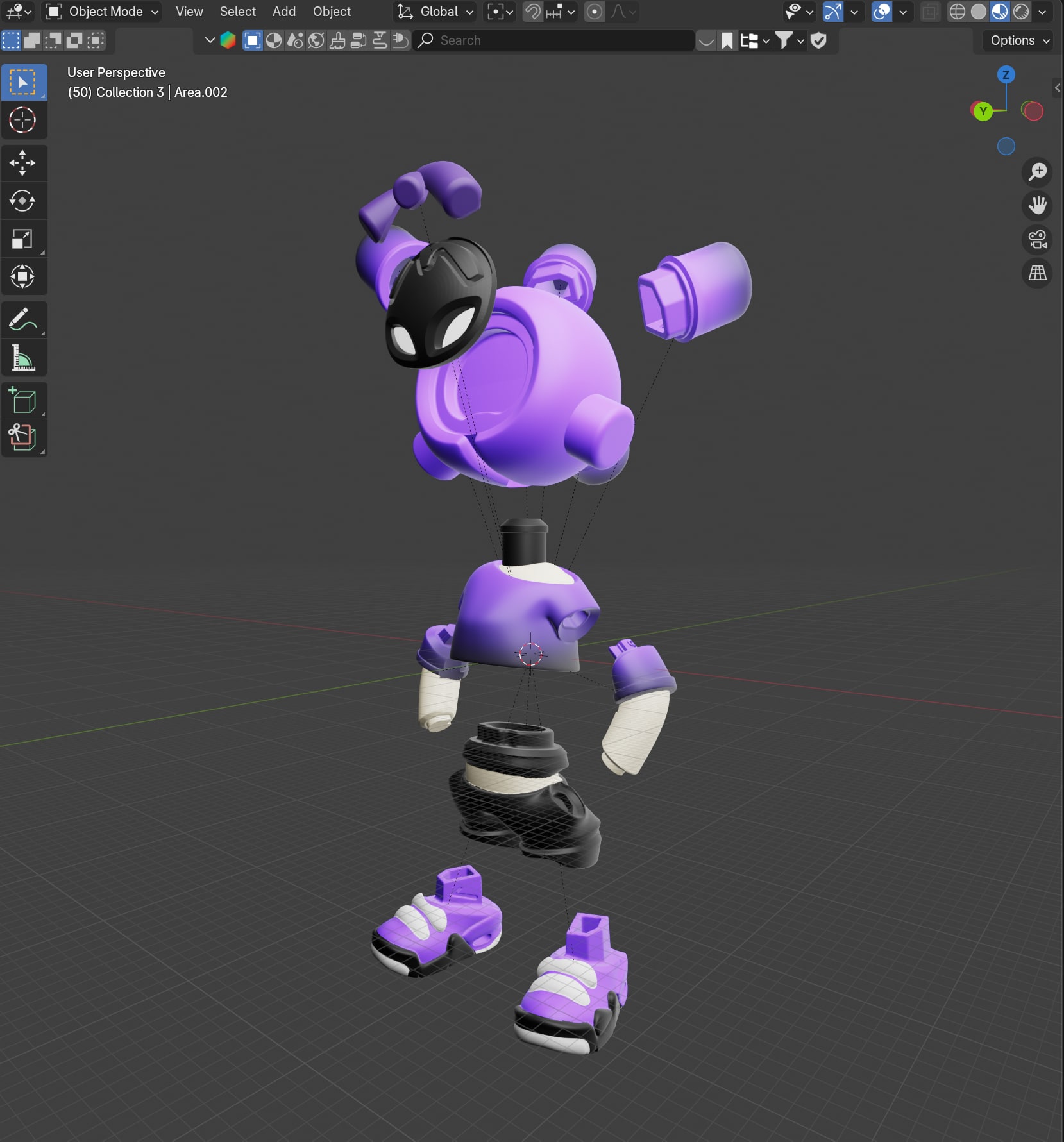
The 3D model of an EQSO The Crew figure in exploded view: the split into parts is planned at the modelling stage.
Step 3: the prototype
The model is 3D-printed in resin. It is the first time you hold your mascot in your hand, and often the moment for adjustments: a head slightly too big, an arm too thin, a colour to rethink. The colour references (Pantone) are also locked for the factory.
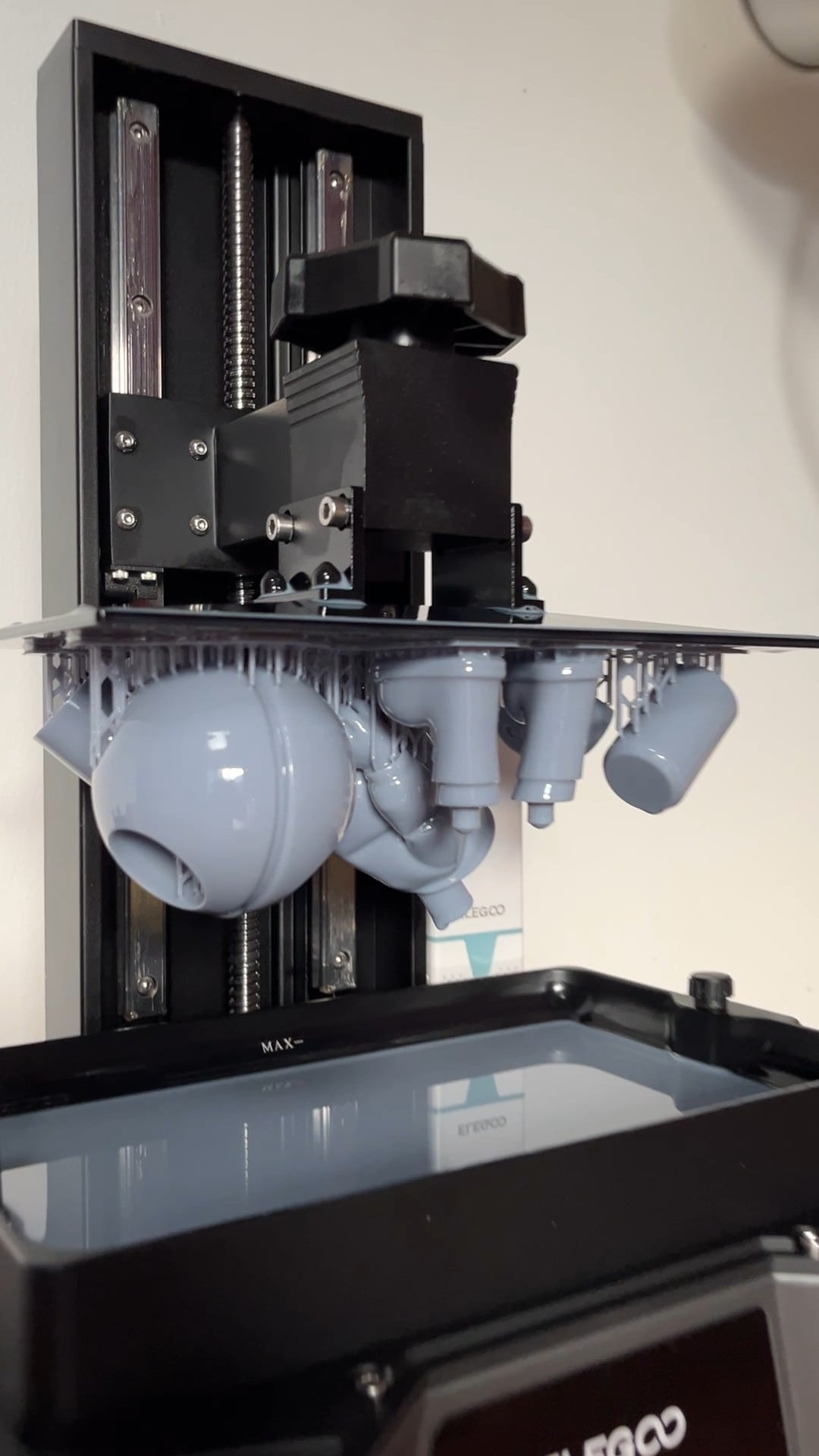
3D printing one of our prototypes in resin: the parts come out of the printer on their supports.
Step 4: choose the material and the quantity
| Goal | Quantity | Material often suited |
|---|---|---|
| Gift for your best customers | Small | Resin |
| Merchandise sold in stores | Medium | Rotocast vinyl |
| Giveaway handed out widely, series of characters | Large | Injected PVC |
| Showpiece for a stand | One-off or very small run | Resin, fibreglass |
The exact quantity thresholds depend on size and complexity. At Popterror Studio, we produce in vinyl (from 300 pieces) and in PVC (from 1,000 pieces). The full comparison is in our guide vinyl vs PVC vs resin figures.
Step 5: packaging that lives up to it
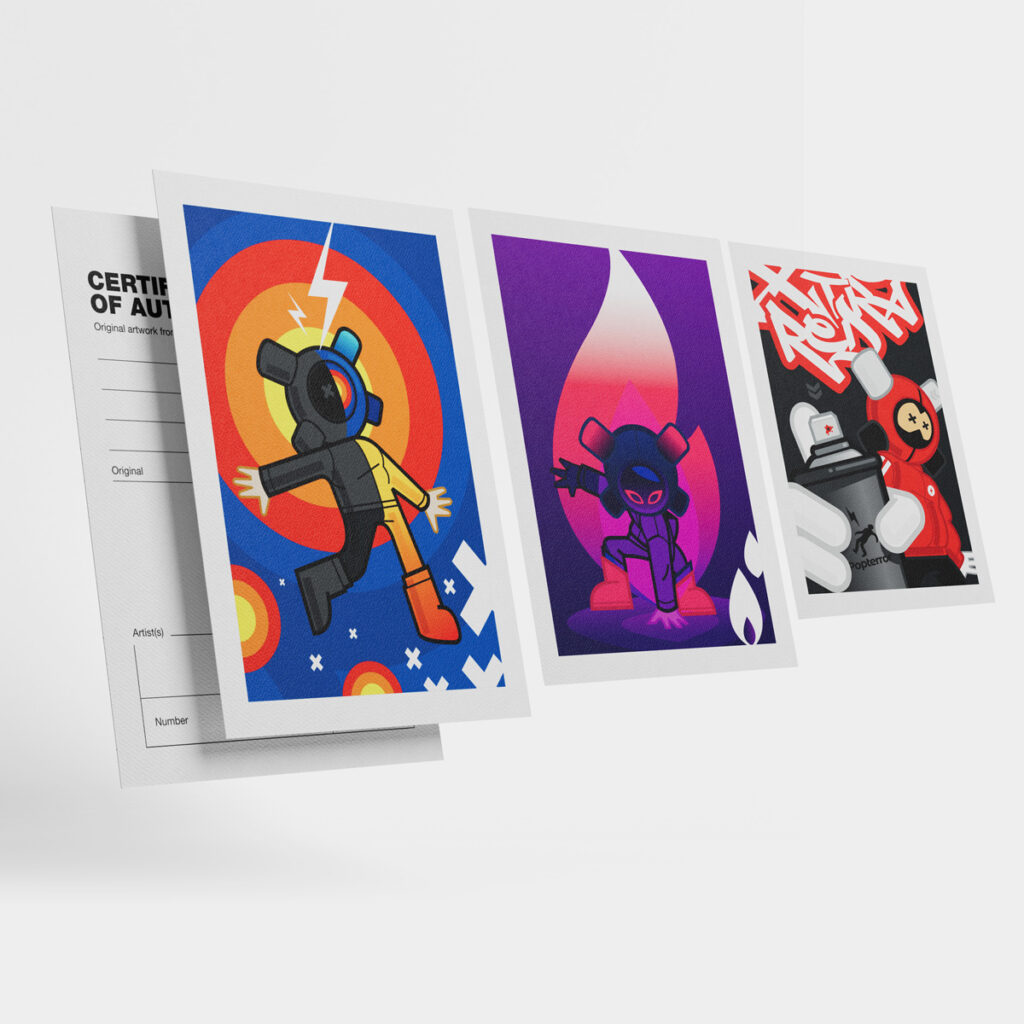
Packaging turns the figure into a gift. A box printed in the brand’s colours, a careful insert, a card that tells the mascot’s story: that is often what makes the difference between “an object” and “an object people keep”. For a limited edition, add numbering and a certificate, as we do for our EQSO art toys.
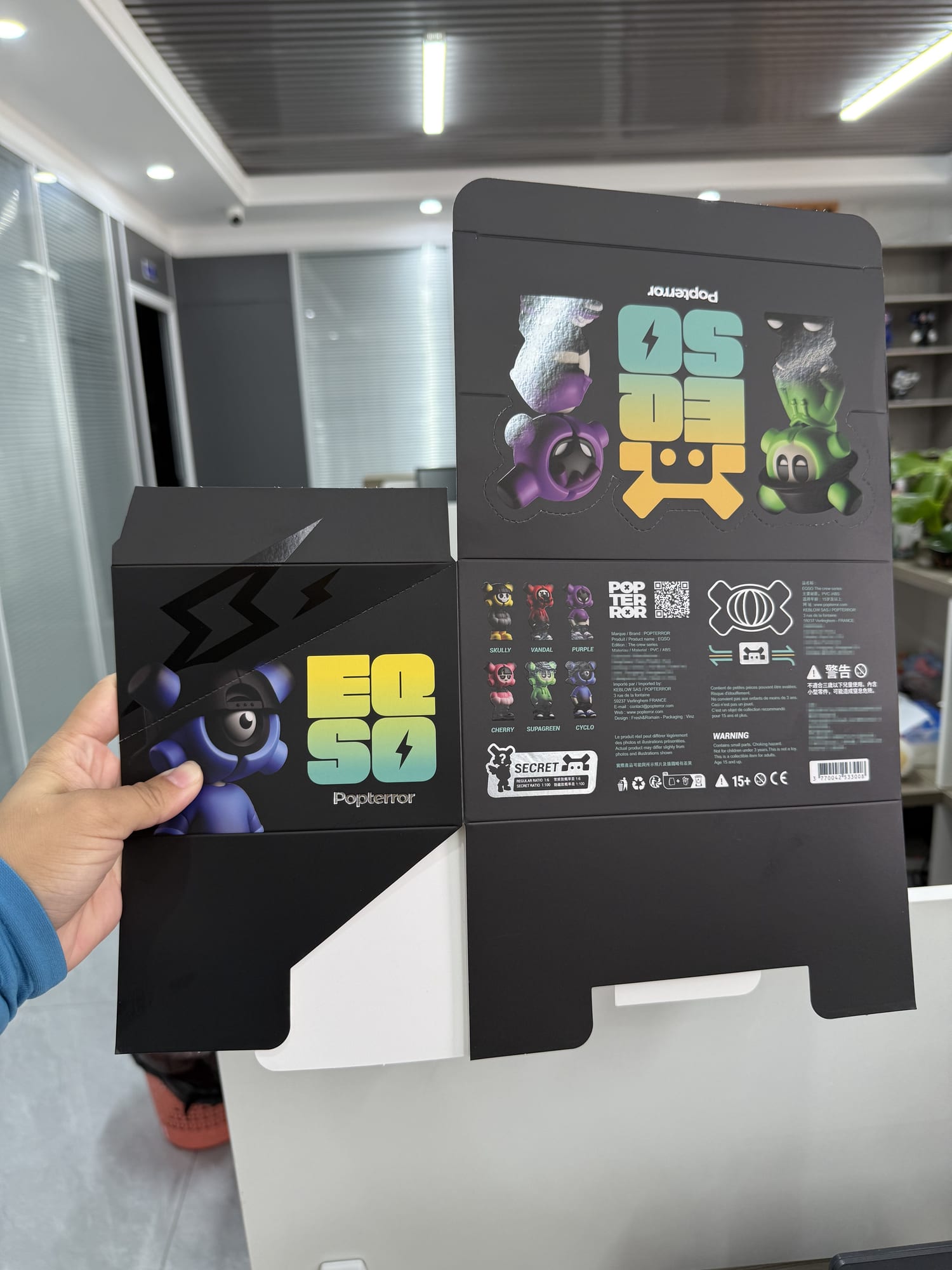
The display of our EQSO The Crew blind box, printed in the colours of the EQSO universe and still flat.
Going further: series, blind box, collab
Once your mascot’s base is modelled, variations become accessible:
- several colourways or outfits with the same moulds;
- a series of characters around the mascot, sold as a custom blind box;
- a numbered collector’s edition for an anniversary or a launch, see our page on the limited-edition collectible figure.
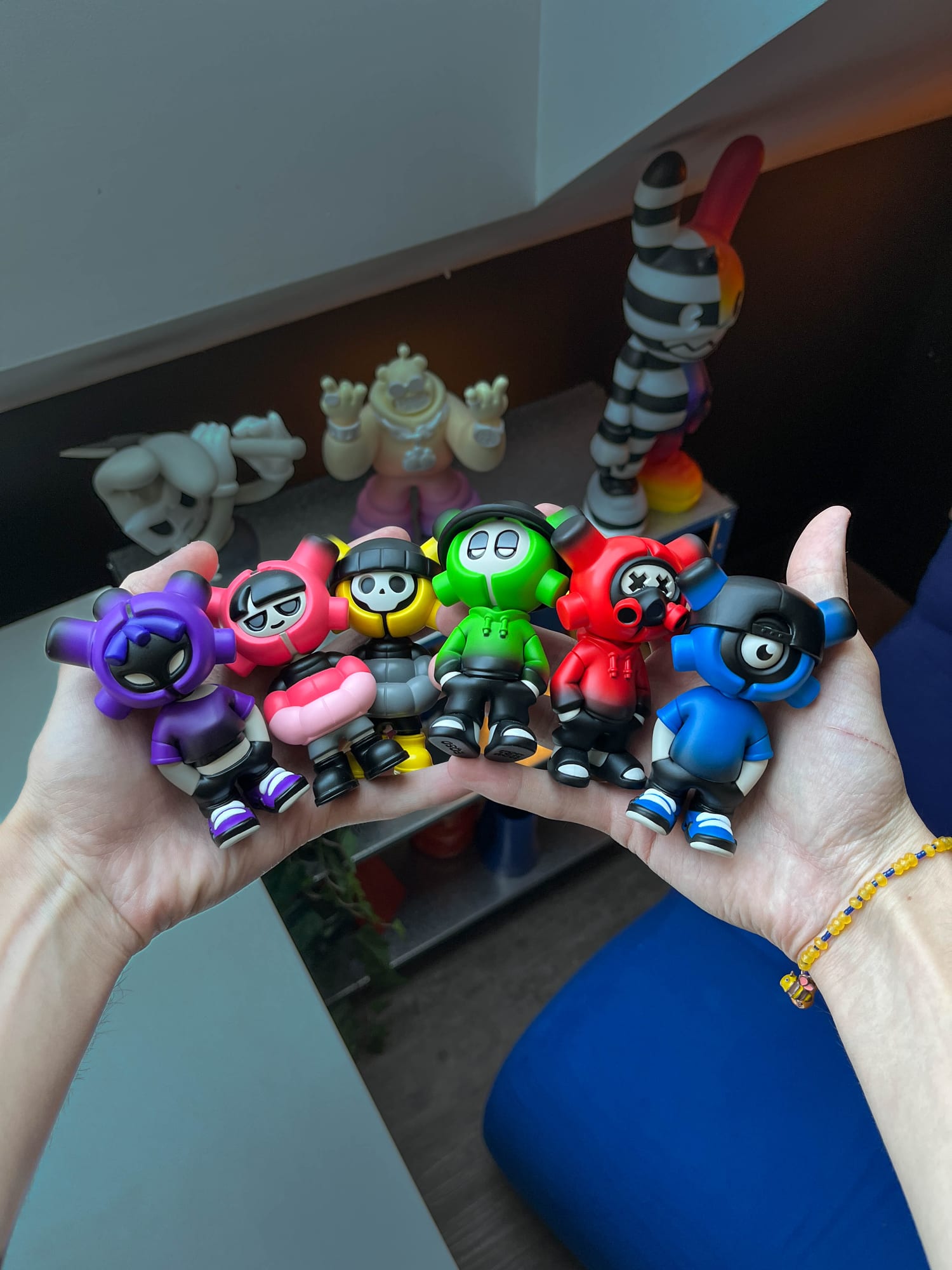
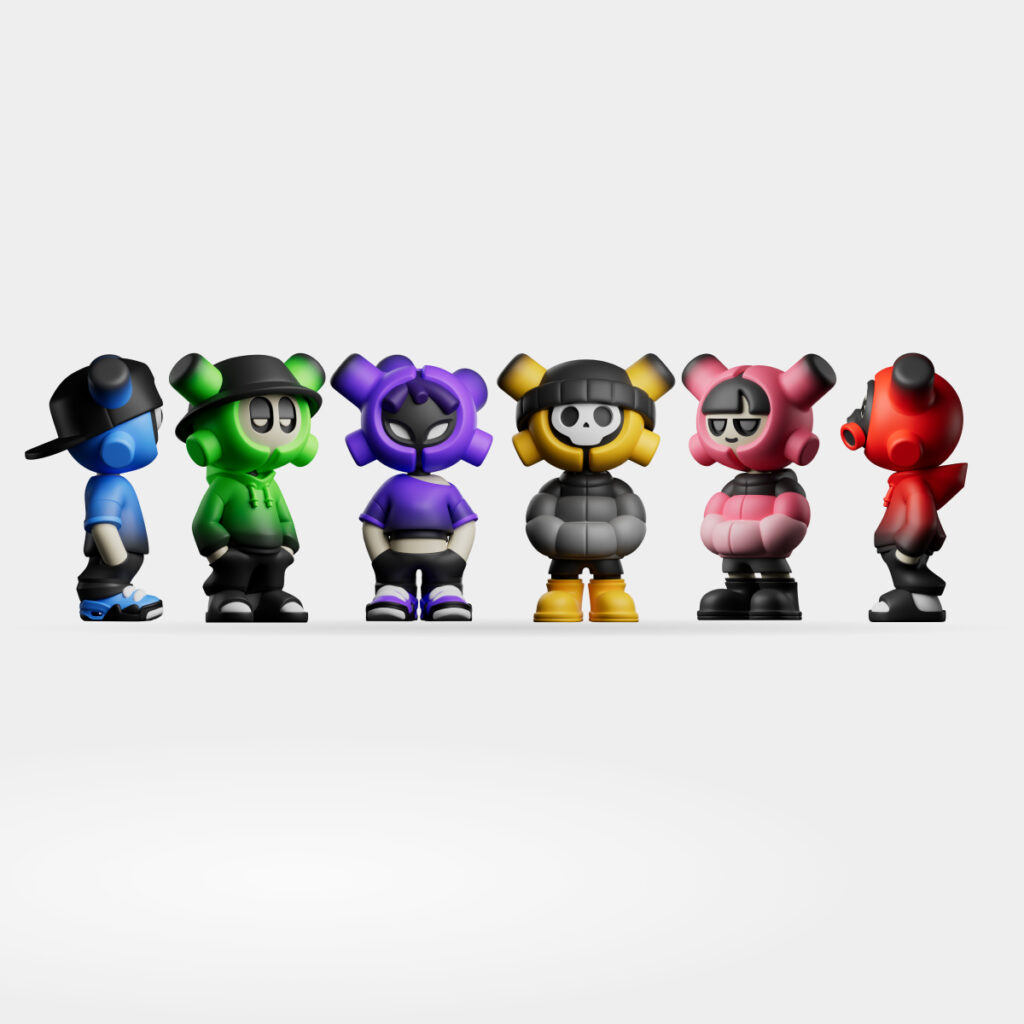
A series of characters built on one base: the six figures of our EQSO The Crew blind box.
How much time and budget should you plan?
Turning an existing mascot into a figure is often faster than creating a character from scratch, since the base design already exists. You still need to allow for adapting it to volume, the 3D, the prototype, the moulds, production and shipping. Typical lead time: 6 to 8 months from brief to delivery; at Popterror Studio, projects start from €10,000. For a first personalised estimate, use our custom figure cost estimator and choose “We have a drawing of the character”.
Who does what in the project?
- Your brand provides the character, its usage rules and the project goal, and approves each step.
- The studio adapts the character to volume, produces the 3D and the prototype, prepares the production files, and follows manufacturing and quality control.
- The partner factory makes the moulds, produces, paints, assembles and packs.
At Popterror, you have a single point of contact, in France, who coordinates everything: that is what prevents your mascot from being “reinterpreted” at every step.
Which mistakes should you avoid?
- Wanting to reproduce the drawing exactly, fragile details included.
- Forgetting the back and the side: they will be visible on the object.
- Choosing the material before the quantity.
- Neglecting the packaging, when it carries much of the perceived value.
- Forgetting compliance if the figure may end up in children’s hands.
Your mascot does not exist yet? Start with our guide on how to create a brand mascot. It already exists? Our custom figure manufacturing service turns it into an object, and our page on custom figure design and production for brands presents our full support.
Frequently asked questions
My mascot only exists in 2D, is that a problem?
No, it is the most common case. The missing views (side, back) simply need to be drawn, and a few interpretation choices made in volume, which you approve before the 3D.
What size should a mascot figure be?
It depends on the use: a small desk figure for a customer gift, a 12 to 20 cm piece for a collectible, or a large piece for a stand. Size has a big impact on price.
How many figures should you order?
The minimum quantity depends on the technique: resin allows very small runs, while vinyl and PVC need larger volumes. At Popterror Studio, we produce from 300 pieces in vinyl and 1,000 pieces in PVC; resin is not part of our offer.
Can you make several versions of the mascot?
Yes, and it is often a good idea: several colourways or outfits on the same base reuse the same moulds. Several different characters can even become a blind box.
Is a mascot figure a toy?
If it may be given to children, yes: it must then meet toy safety rules (EN 71 and CE marking in the EU, ASTM F963 in the US). A collectible reserved for adults is labelled differently. We help you decide from the brief.
Related guides
Read next
How to create a brand mascot that lasts (and sells)
How to create a brand mascot: goals, personality, character design, variations, usage guidelines, mistakes to avoid and what great mascots share.
How to make custom figures: the complete guide, from idea to factory
How to make custom figures in series: character design, 3D modelling, prototype, materials, moulds, production, quality control, packaging and shipping.
Premium brands and collectible figures: why art toys appeal to luxury
Why premium and luxury brands invest in collectible figures and art toys: scarcity, drops, artist collaborations, packaging and storytelling.