Guide · Popterror Studio
Vinyl vs PVC vs resin figures: which material should you choose?
 By Romain Czysz, 3D artist, co-founder of PopterrorPublished Updated Reading time: 3 min

The short answer
Choose rotocast vinyl for hollow, light figures with an art toy finish in medium to large runs, injected PVC for very large runs at the lowest unit price, and resin for very small, highly detailed runs. The right choice depends first on your quantity, then on the finish you want and your budget.
The material of a figure decides its finish, its strength and its weight, but also the minimum quantity and the price. Three families dominate the world of brand figures and art toys: rotocast vinyl, injected PVC and resin. Here is how to choose between them.
What are the three main families of materials?
Rotocast vinyl
Liquid PVC (called plastisol) is poured into a metal mould, which is heated and rotated in several directions. The material coats the inside of the mould, then hardens. The result: a hollow part, light, with a soft matte surface. It is the signature technique of designer vinyl toys, and the one used for our EQSO figures.
Injected PVC
The plastic is melted, then injected under high pressure into a machined steel mould. The part is solid and very precise, with crisp detail. It is the technique used for figures produced in very large quantities, like many blind box and game figures.
Resin
Liquid resin (often polyurethane) is cast into a silicone mould, then demoulded by hand once hardened. No steel tooling, so a low starting cost, but each piece takes labour time. It is the technique of very small runs, collector statues and prototypes.
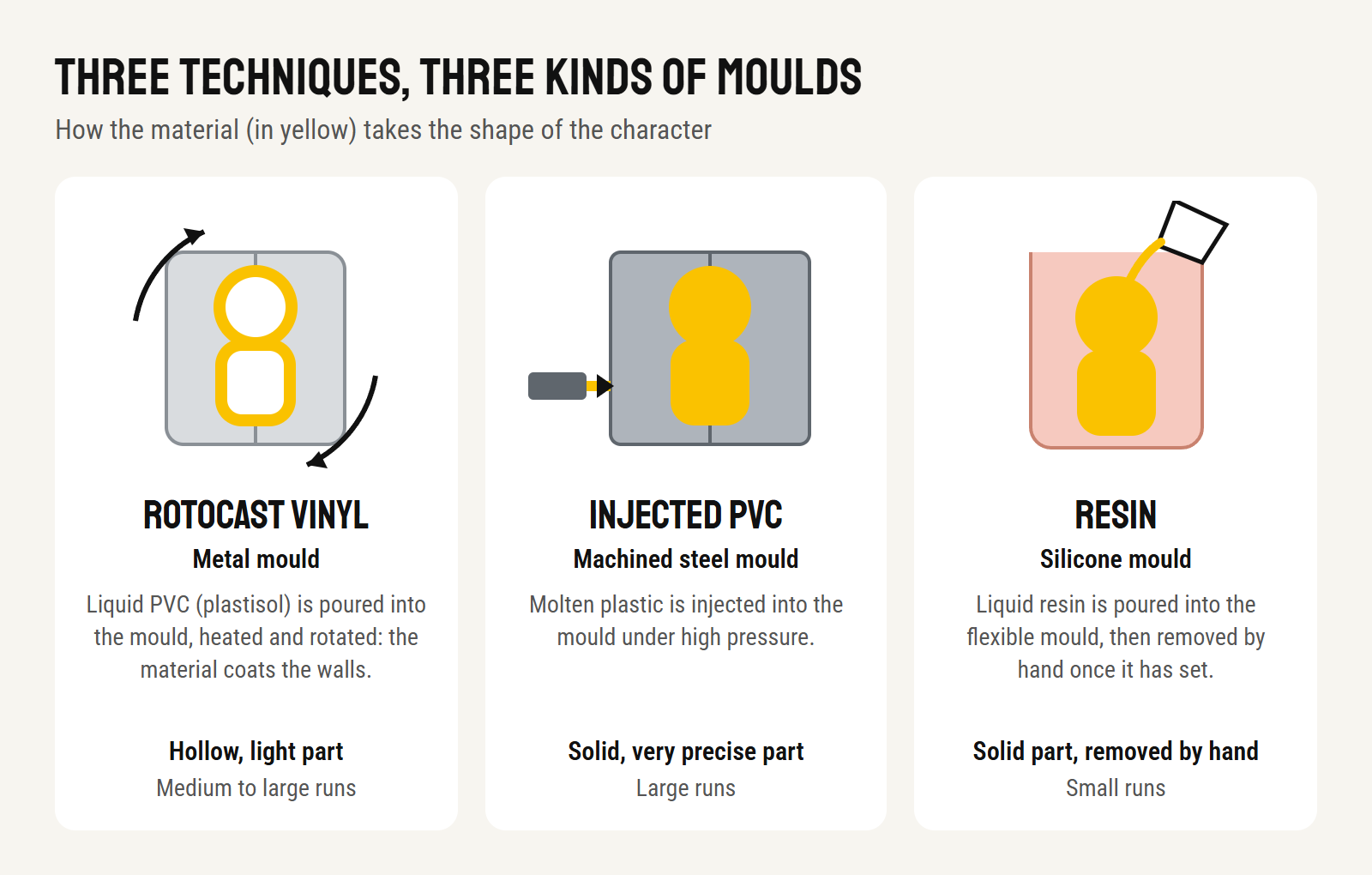
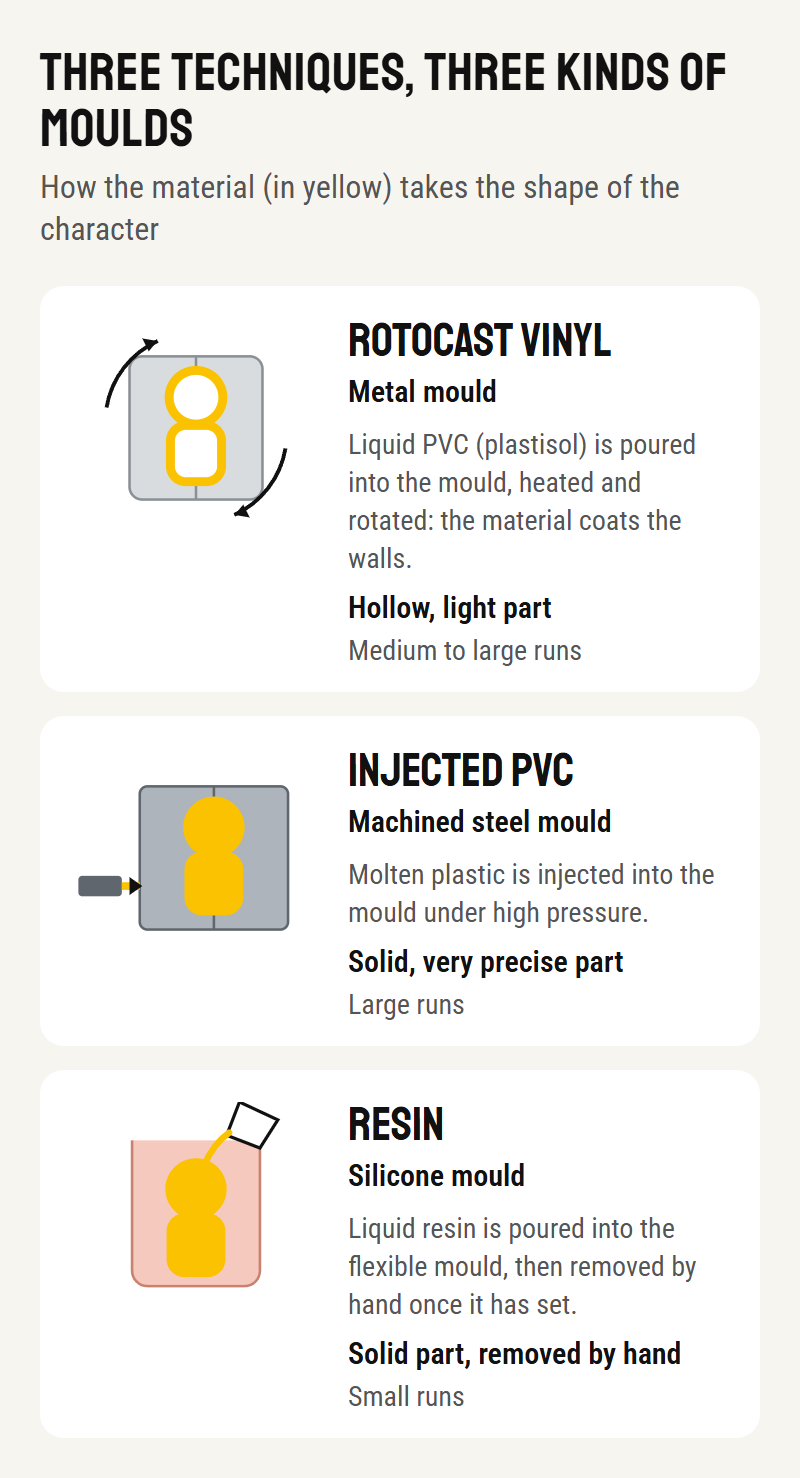
Vinyl, PVC or resin: three techniques, three kinds of moulds.
How do they compare?
| Criterion | Rotocast vinyl | Injected PVC | Resin |
|---|---|---|---|
| Type of part | Hollow, light | Solid, precise | Solid, heavy |
| Level of detail | Good | Very good | Excellent |
| Impact resistance | Good (flexible) | Good | More fragile (brittle) |
| Mould cost | Medium | High | Low |
| Unit price | Medium | Low in large runs | High |
| Suitable run | Medium to large | Large to very large | Very small |
| Indicative minimum quantity | 300 pieces (our minimum) | 1,000 pieces (our minimum) | Around fifty pieces (not offered by the Studio) |
| Typical finish | Matte, soft art toy | Detailed game figure | Collector statue |
Which material for your quantity?
This is the question that settles it most often.
- A few dozen to a few hundred pieces: resin is often the only sensible option, because it avoids investing in metal moulds.
- A few hundred to a few thousand pieces: rotocast vinyl becomes attractive, with a good balance between mould cost and unit price.
- Several thousand pieces and more: injected PVC takes the lead, because its very expensive steel mould is spread over a large volume and the unit price becomes the lowest.
The exact thresholds depend on size and complexity. At Popterror Studio, we produce from 300 pieces in vinyl and 1,000 pieces in PVC; we do not offer resin. To dig deeper, read our guide to the minimum order quantity for custom figures.
Which material for the finish you want?
Want a designer object, soft to the touch, made for a shelf? Rotocast vinyl is the natural choice. Its matte surface brings out flat colours, and its hollow parts allow fairly large figures without the weight.
Want a small, highly detailed figure produced in large numbers? Injected PVC reproduces small details precisely and stays economical in large runs.
Want an exceptional, highly detailed piece in a small quantity? Resin gives a statuette finish, ideal for a numbered collector’s edition, a trophy or an exhibition piece.
What about very large formats?
Beyond a certain size, the techniques change. The 50 cm and 120 cm EQSO sculptures shown in our exhibitions are made of resin and fibreglass, materials suited to monumental pieces produced in very small numbers. It is a different manufacturing logic, closer to sculpture than to industrial production.
Which mistakes should you avoid when choosing a material?
- Choosing the material before the quantity. Quantity drives the technique, not the other way round.
- Wanting the finish of resin at the price of injection. Each technique has its strengths: you have to accept its trade-offs.
- Forgetting how it will be used. An object handled by children must be sturdy and meet toy safety rules; a display statue can be more fragile.
- Ignoring weight. It affects the shipping cost, especially for large solid pieces.
- Not testing the finish. A pre-production sample in the final material is essential before launching the run.
Our choice for the EQSO art toys
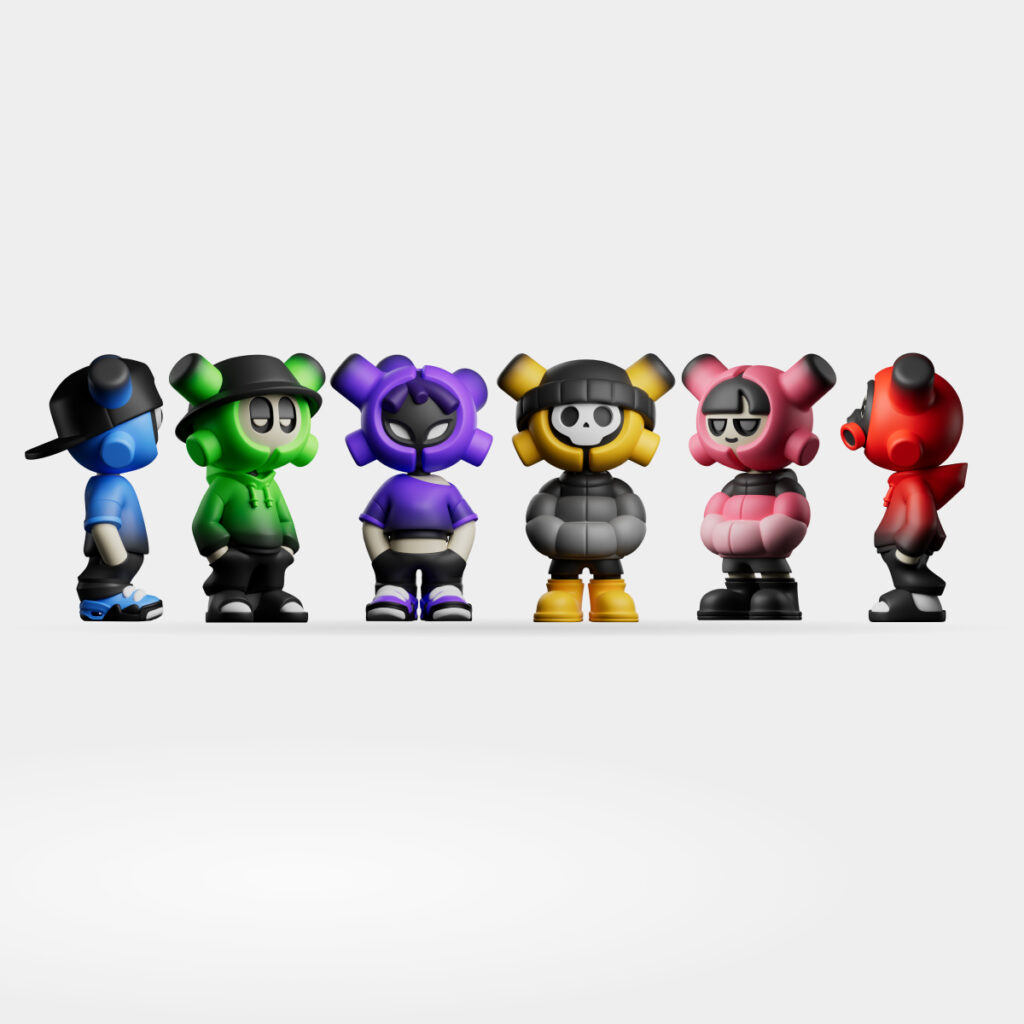
For our 12.5 cm EQSO figures as for our blind box The Crew, we chose vinyl: it gives the warm matte finish our collectors love, stays light in the hand and handles being picked up well. Our first prototypes, on the other hand, were printed in resin, the ideal technique to check the volumes before launching the moulds.
Hesitating between several materials for your project? Our custom figure manufacturing service starts with exactly this advice, and our page on custom figure design and production for brands presents our full support.
Frequently asked questions
What is the difference between vinyl and PVC?
Chemically, the vinyl used for art toys is a form of PVC. The real difference is the technique: rotocast vinyl is liquid PVC that coats a rotating mould and gives hollow parts, while injected PVC is melted and injected under pressure into a steel mould and gives solid, precise parts.
Is resin stronger than vinyl?
Resin is hard and reproduces detail very well, but it is more brittle if dropped. Vinyl is more flexible and handles knocks better, which makes it better suited to objects that get handled.
Which material is best for a blind box?
Blind boxes are usually produced in injected PVC or in vinyl, because quantities are large and the figures small. Our EQSO The Crew blind box is made of vinyl.
Can a figure be made from recycled or bio-based material?
Alternatives exist and are developing, but their finish, cost and availability vary a lot. If it matters to your brand, let’s discuss it from the brief.
Which material for a figure over 20 cm?
For large sizes, rotocast vinyl is often preferred because hollow parts stay light. For monumental pieces (50 cm, 120 cm), resin or fibreglass takes over, like the EQSO sculptures shown in our exhibitions.
Related guides
Read next
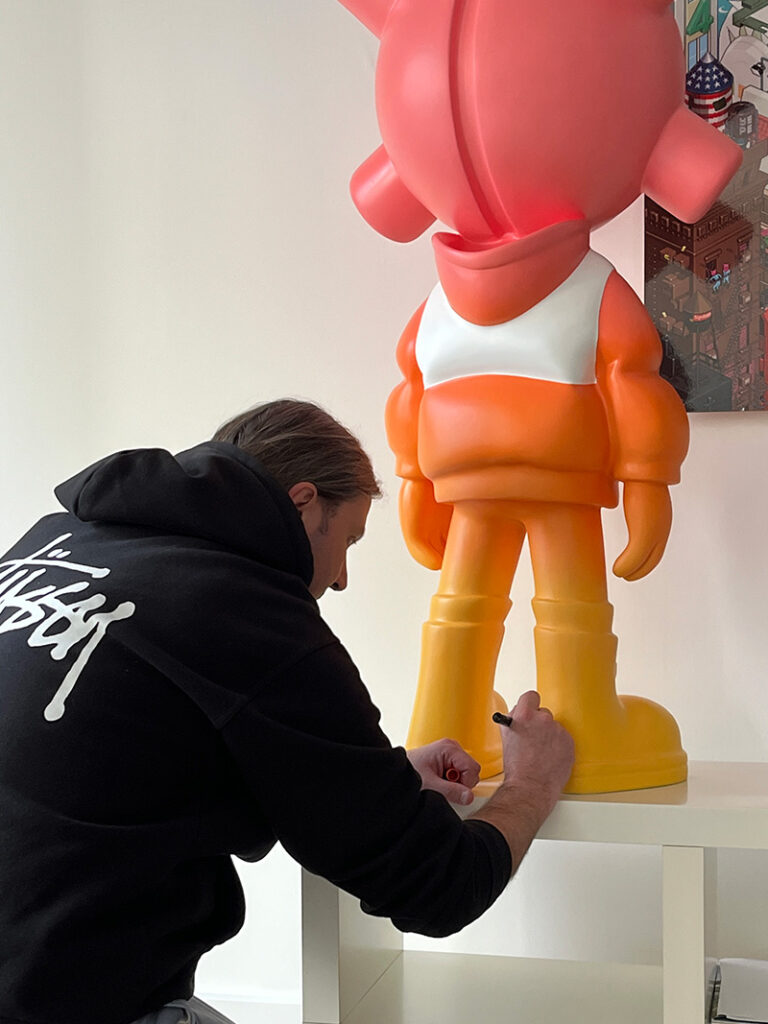
Figure moulds (molds): steel, metal or silicone, how to choose?
Figure moulds explained: steel for injection, metal for vinyl, silicone for resin. How each toy mold works, its lifespan, its cost and the right run size.
How much does it cost to make a custom figure? Every cost explained
Custom figure cost explained: fixed costs (design, 3D, moulds), cost per piece, how quantity changes the unit price, and tips to keep your budget in check.
How to make custom figures: the complete guide, from idea to factory
How to make custom figures in series: character design, 3D modelling, prototype, materials, moulds, production, quality control, packaging and shipping.