Guide · Popterror Studio
How to make and launch your own art toy: a guide for artists and creators
 By Romain Czysz, 3D artist, co-founder of PopterrorPublished Updated Reading time: 3 min
The short answer
To launch your own art toy, you need a character that works in 3D, a model built for the factory, a prototype, an edition plan (run size, numbering, certificate), funding (own money, pre-orders or crowdfunding), then mass production, in vinyl from 300 pieces, and a sales plan. Allow 6 to 8 months from a character that is already drawn.
Many artists dream of seeing their character for real, on a shelf, in a limited edition. Few know where to start. We have been there: in 2023, in Lille, France, we created EQSO and took it all the way. Sketches, 3D modelling, resin prototypes, a Kickstarter campaign, vinyl production, packaging, online and in-store sales. Here are the steps to make your own vinyl art toy, as we lived them.
This guide is written for artists, illustrators, street artists, content creators and small studios. For the technical details of manufacturing, see our complete guide to making custom figures.
Step 1: a character that works in 3D
A good drawing does not always make a good figure. An art toy must read at a glance, from every angle: a strong silhouette, proportions that stand up, details large enough to be moulded and painted. Before moving to 3D, draw your character from the front, side and back: these views are the basis of the model.
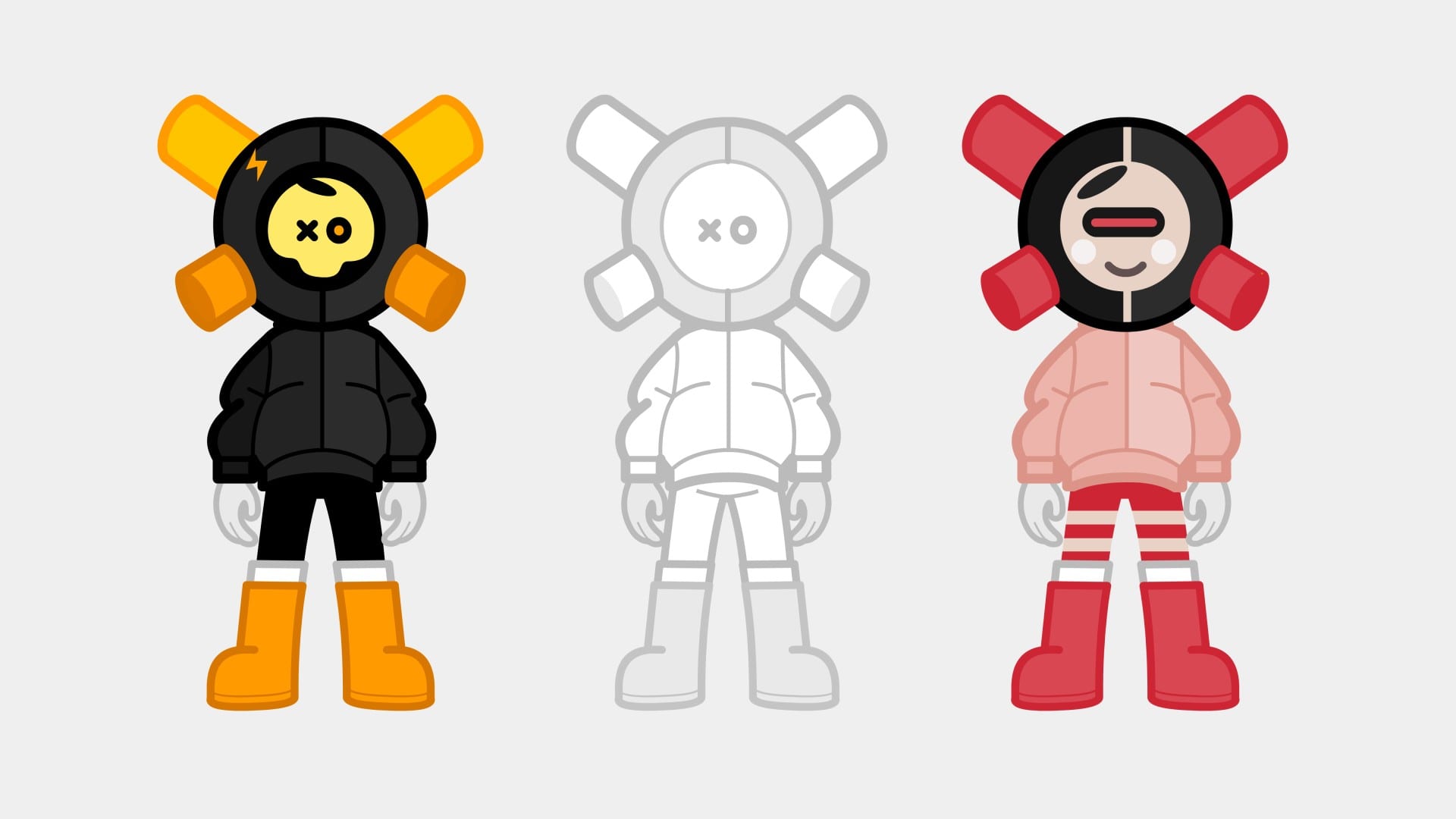
EQSO’s front-view 2D drawings, with two colourways.
Step 2: 3D modelling… for the factory
A “pretty” 3D model is not necessarily manufacturable. For production, the character has to be split into parts (head, body, arms, accessories), with even wall thickness, no undercuts that block demoulding, and assembly in mind. That is the work Romain, a 3D artist trained at ArtFX, does on our characters.
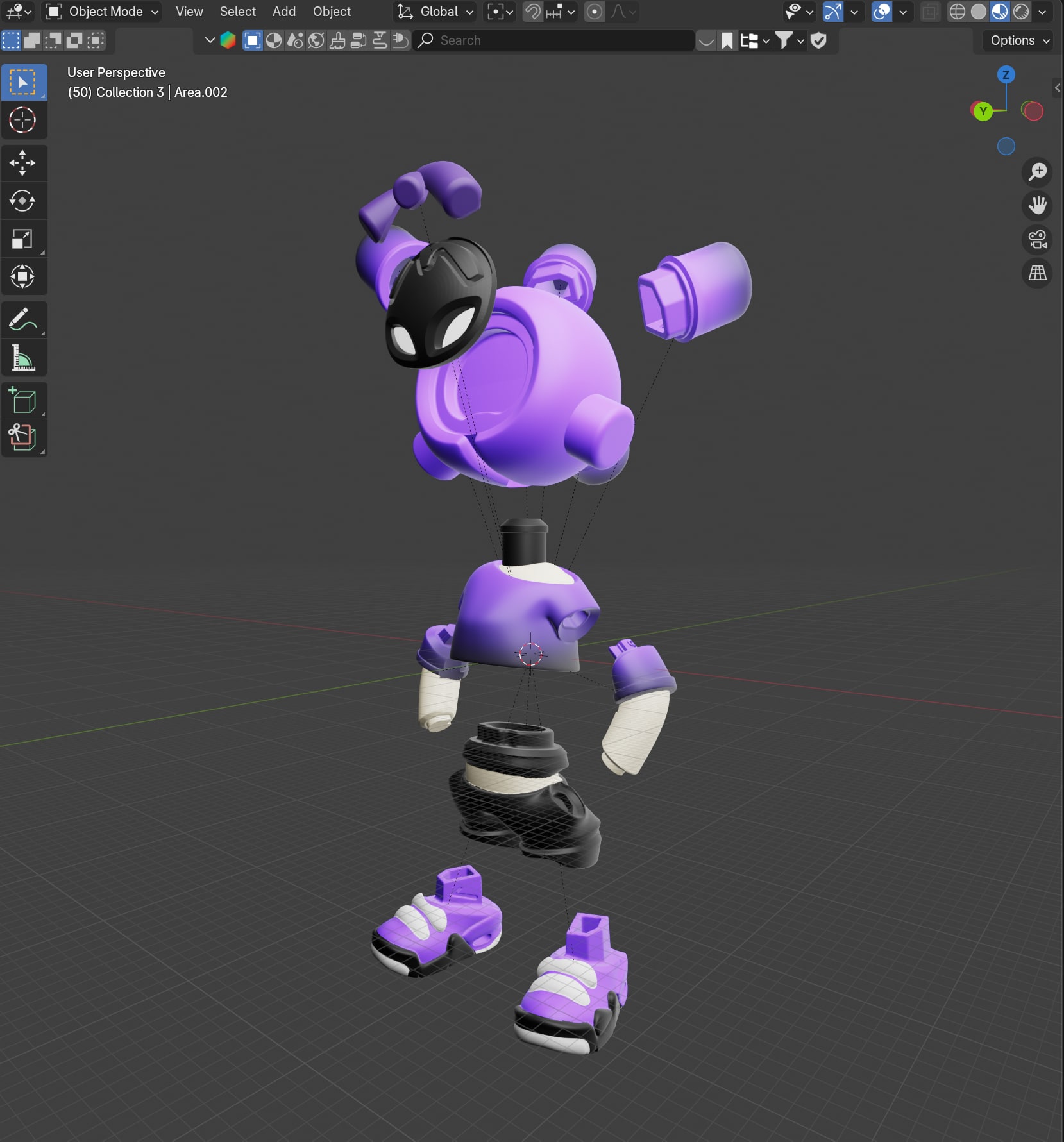
Exploded 3D model of an EQSO The Crew figure: every part is designed for moulding and assembly.
Step 3: the prototype
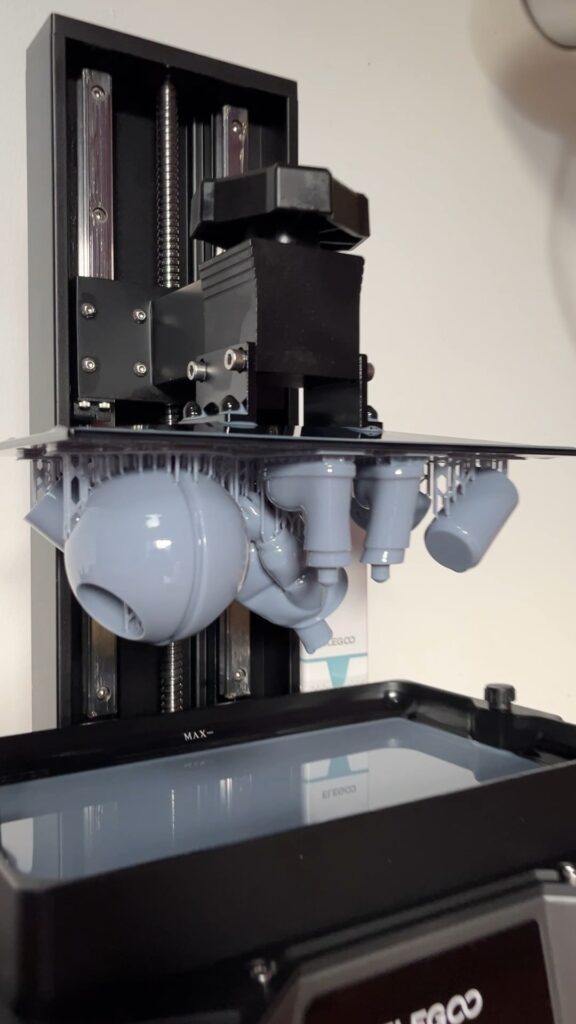
The prototype, 3D-printed in resin, lets you hold the character in your hand, check the volumes and balance, then approve the colours. Our first EQSO figures were 3D-printed resin prototypes, made even before the Kickstarter campaign. Learn more in our guide to toy prototyping.
Step 4: choosing your edition
It is a commercial decision as much as an artistic one:
- Run size: it must reach the production minimum (300 pieces in vinyl) without exceeding what you can sell. Our EQSO series are limited: 500 copies in total for Series 1, 300 per model for Series 2.
- Numbering and certificate: they give a collectible its value. Our art toys come with a signed certificate of authenticity.
- Packaging: a beautiful box is part of the object, and many collectors keep it.
- Format: a single figure, a series in several colourways, or a blind box with several characters (minimum 300 per character and 2,000 pieces in total).
Step 5: funding production
Mass production is largely paid for before it is sold: 3D, moulds, production, shipping. Three ways to fund it:
- Your own money: simple, but you carry all the risk.
- Pre-orders on your shop or from your community.
- Crowdfunding, such as Kickstarter: it funds the run and tests public interest before production starts.
We chose Kickstarter for EQSO Series 1, in February 2024: the campaign reached its goal, with €6,118 raised against a €6,000 goal, from 46 backers (Kicktraq figures). If you go the crowdfunding route, show a real prototype and polished 3D renders, and announce realistic delivery dates: production takes several months, shipping included.
Step 6: mass production
Once the prototype and colours are approved come the moulds, a pre-production sample (the first production pieces, to approve), production, quality control, then shipping and customs clearance. Allow 6 to 8 months in total from a character that is already drawn, including 6 to 8 weeks by sea. If your art toy may be bought for children, it must meet toy safety standards: see our guide to figure safety standards.
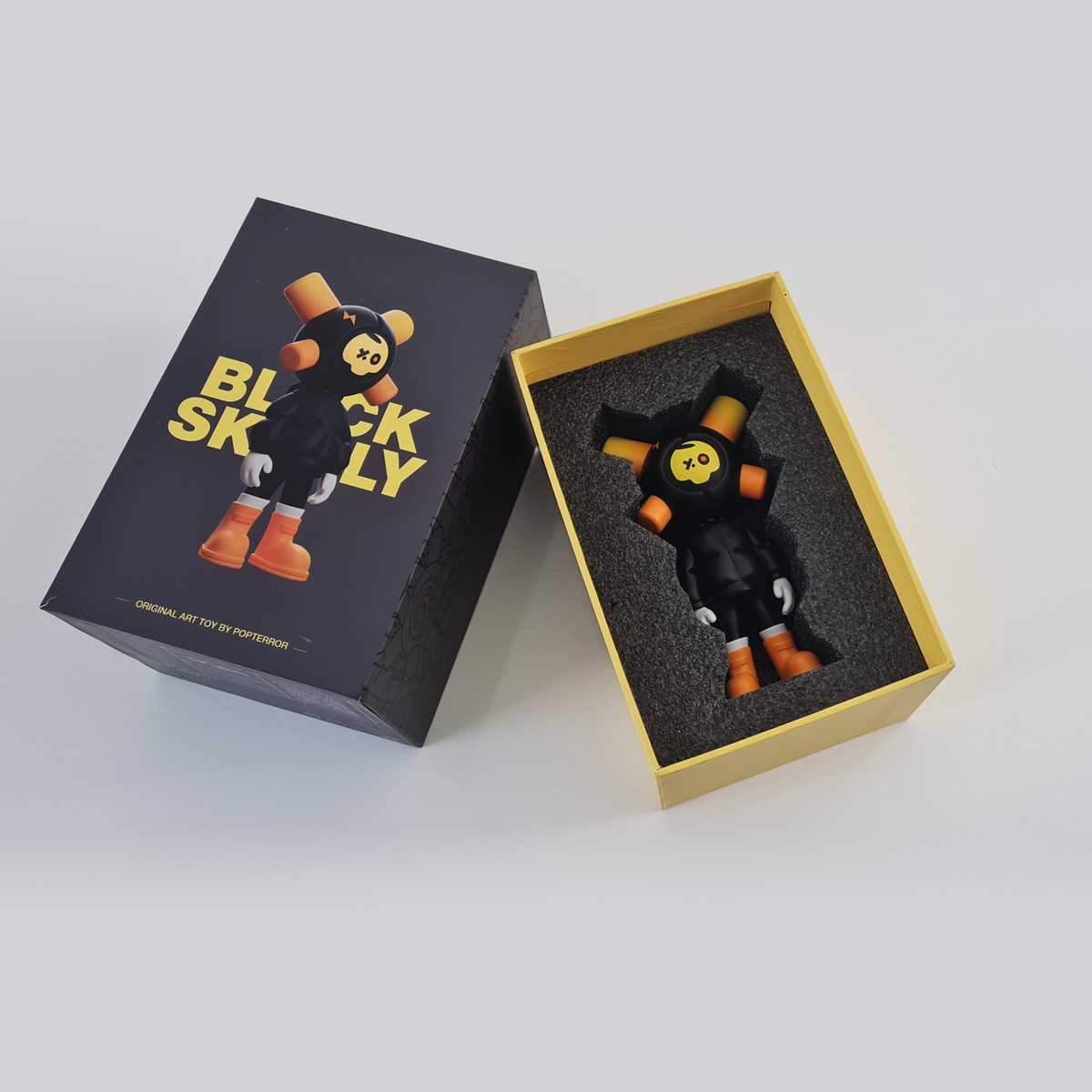
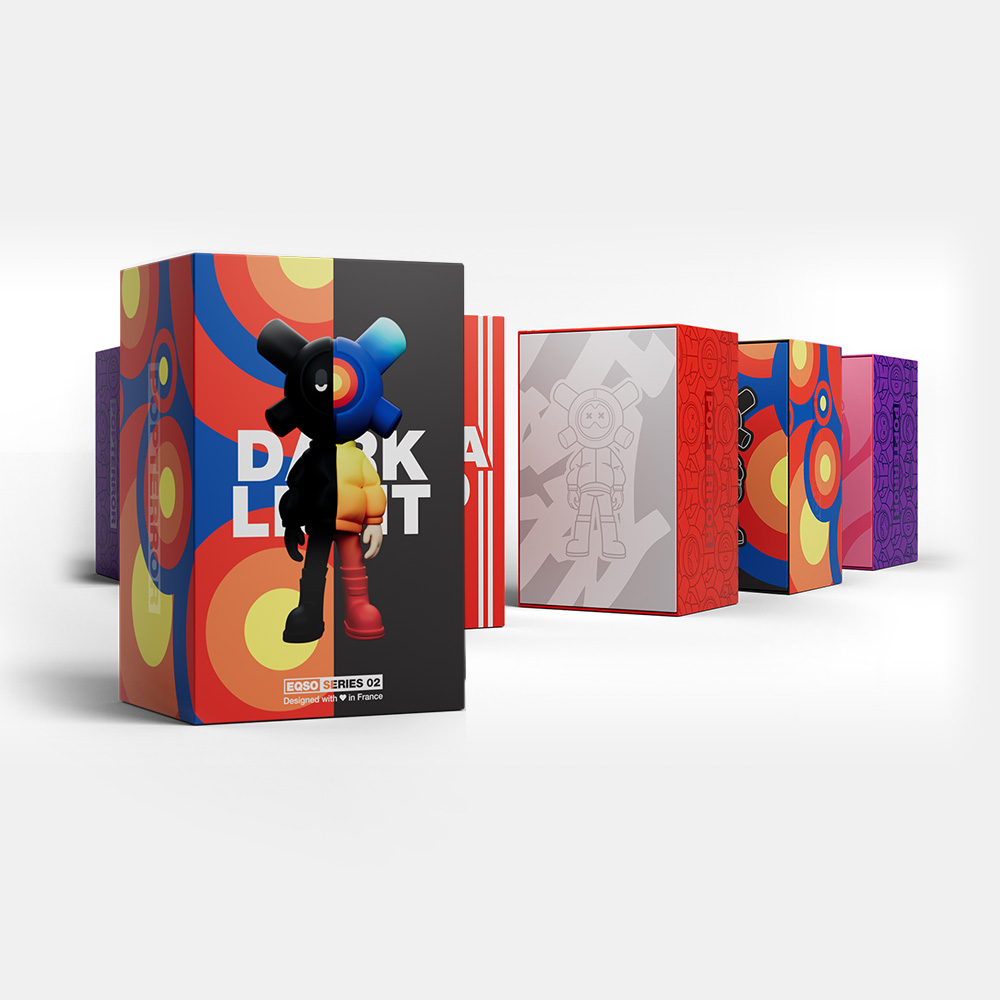
An EQSO art toy in its premium box: the packaging is part of the collectible.
Step 7: selling
An art toy rarely sells itself. The channels we use:
- Our online shop, with careful product pages, photos and videos.
- Specialist retailers: our art toys are sold at the Straat Museum Shop in Amsterdam, by HypaHypa online and by Art By Uzume, among others.
- Fairs and exhibitions: our sculptures and art toys have been shown at Paris Drouot, SPERA Art Fair, Osaka Art Fair and Grenoble Art Up.
- Social media: behind the scenes, prototypes, unboxings.
In short
Launching an art toy takes seven steps: a character that works in 3D, a model built for the factory, a prototype, a well-chosen edition, funding, closely followed production and a sales plan. If you would like support, see our custom figure manufacturing service, the breakdown of custom figure costs, or go back to the Popterror Studio page.
Frequently asked questions
How much does it cost to launch an art toy?
The budget depends on quantity, size, number of colours and packaging. At Popterror Studio, a production project starts at €10,000, for a minimum of 300 pieces in rotocast vinyl. The price per piece falls with quantity, because 3D work and moulds are paid once.
How many copies should a first art toy run be?
Enough to reach the production minimum (300 pieces in vinyl), not so many that you cannot sell the stock. Our own EQSO series are limited: 500 copies in total for Series 1, 300 per model for Series 2.
Should I use Kickstarter?
It is not mandatory, but it is a good way to fund production and test public interest. We funded EQSO Series 1 on Kickstarter in February 2024: €6,118 raised against a €6,000 goal, from 46 backers.
Resin or vinyl for an art toy?
3D-printed resin is ideal for prototypes. For a run of several hundred pieces, rotocast vinyl is the classic art toy material: light, sturdy, with a great finish. It is the material of our EQSO series.
Where can I sell my art toy?
On your own online shop, through specialist retailers (art toy shops, museum shops, concept stores), and at fairs and exhibitions. Ours are sold on popterror.com and by retailers such as the Straat Museum Shop in Amsterdam.
Related guides
Read next
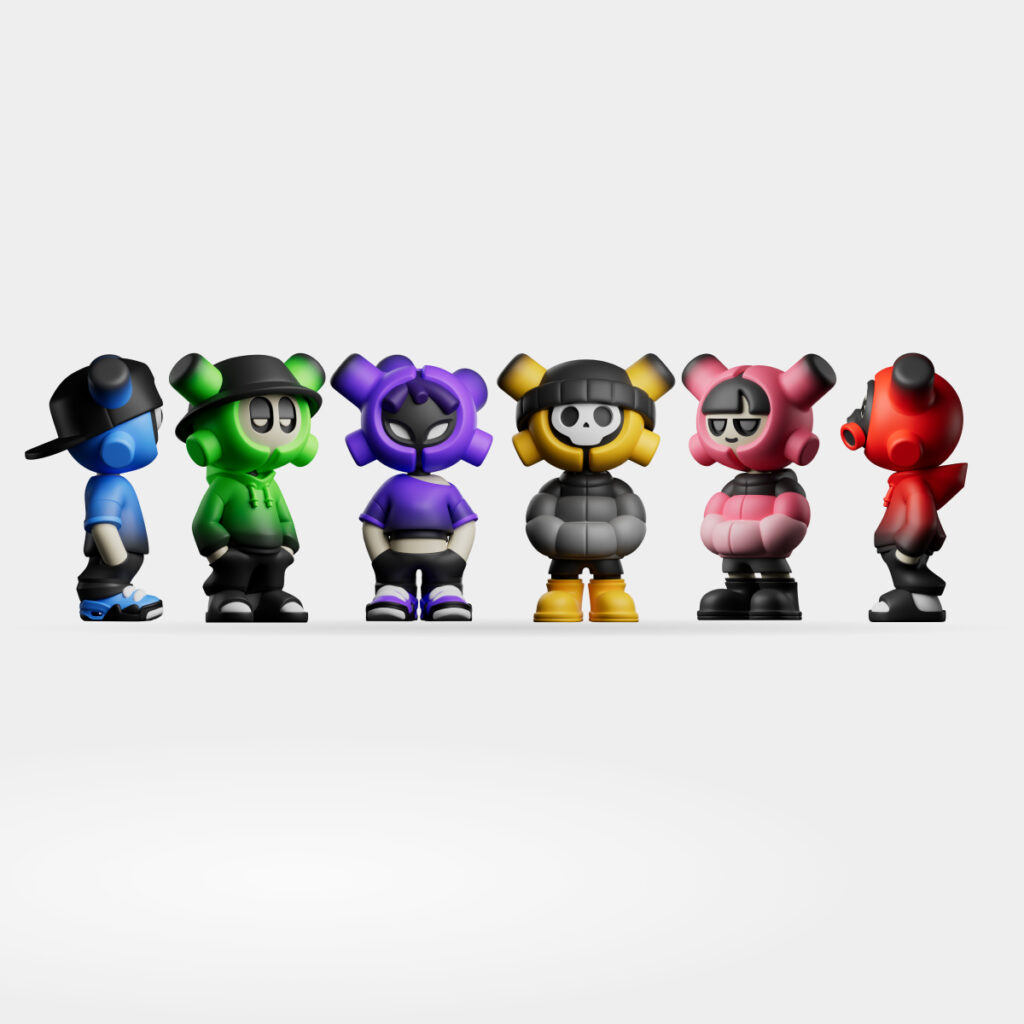
How to make custom figures: the complete guide, from idea to factory
How to make custom figures in series: character design, 3D modelling, prototype, materials, moulds, production, quality control, packaging and shipping.
How much does it cost to make a custom figure? Every cost explained
Custom figure cost explained: fixed costs (design, 3D, moulds), cost per piece, how quantity changes the unit price, and tips to keep your budget in check.
Minimum order quantity for custom figures: understanding MOQ
What is the minimum order quantity to make a custom figure? MOQ by technique (resin, vinyl, PVC), why it exists and how to choose the right quantity.