Guide · Popterror Studio
Toy prototyping: how a figure prototype is made and what it is for
 By Romain Czysz, 3D artist, co-founder of PopterrorPublished Updated Reading time: 2 min
The short answer
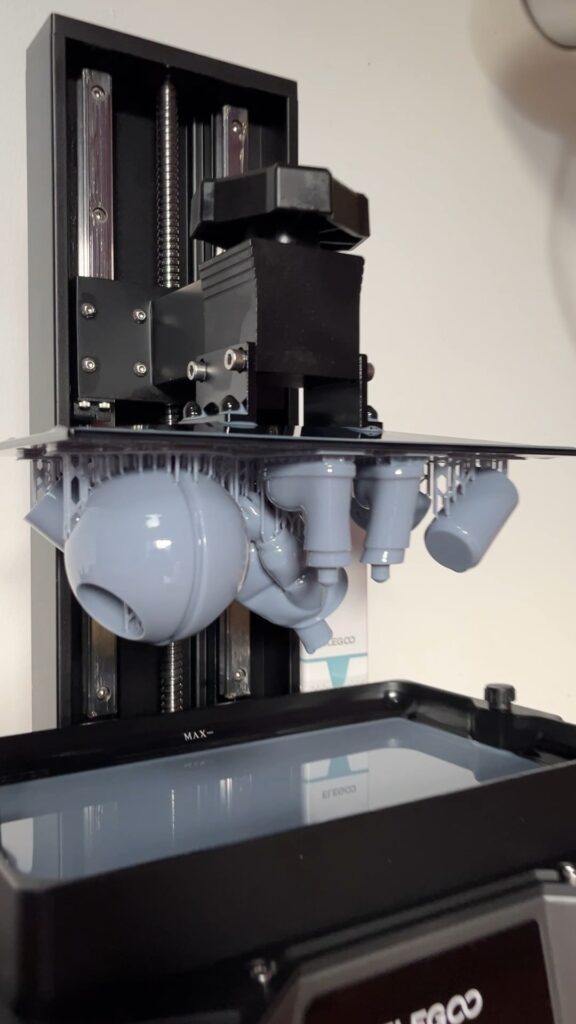
A figure prototype is a first piece 3D-printed in resin from the production 3D model. You hold the character in your hand to approve its volumes, proportions and balance, before locking the colours and launching the moulds. Allow about 3 days of printing, plus time for corrections. Do not confuse it with the pre-production sample, which comes out of the factory just before mass production.
A character can look perfect on screen and disappoint in real life: a head too heavy, a hand too thin, a detail that vanishes at 10 cm. The prototype is when you discover these surprises, while they are still cheap to fix. Here is how we prototype our own figures and those of the brands we work with.
What is a toy prototype for?
- Approving volumes and proportions: what works in an image does not always work in the hand.
- Checking balance: does the figure stand up, with or without a base?
- Checking details: are they large enough to be moulded and painted?
- Preparing colours: the prototype is the basis for the colour references (Pantone) and the paint plan.
- Showing the project: to your team, your customers, or your future backers if you crowdfund.
How is a figure prototype made?
- The production 3D model: the character is split into parts, with even wall thickness and no undercuts, exactly as it will be for the moulds.
- 3D printing in resin: each part is printed with high precision. Allow about 3 days of printing.
- Finishing: removing supports, sanding, assembling the parts.
- Approval: we check, adjust the 3D model if needed, and reprint the parts concerned.
- Colours: once the shapes are approved, we lock the colour references and the paint plan.
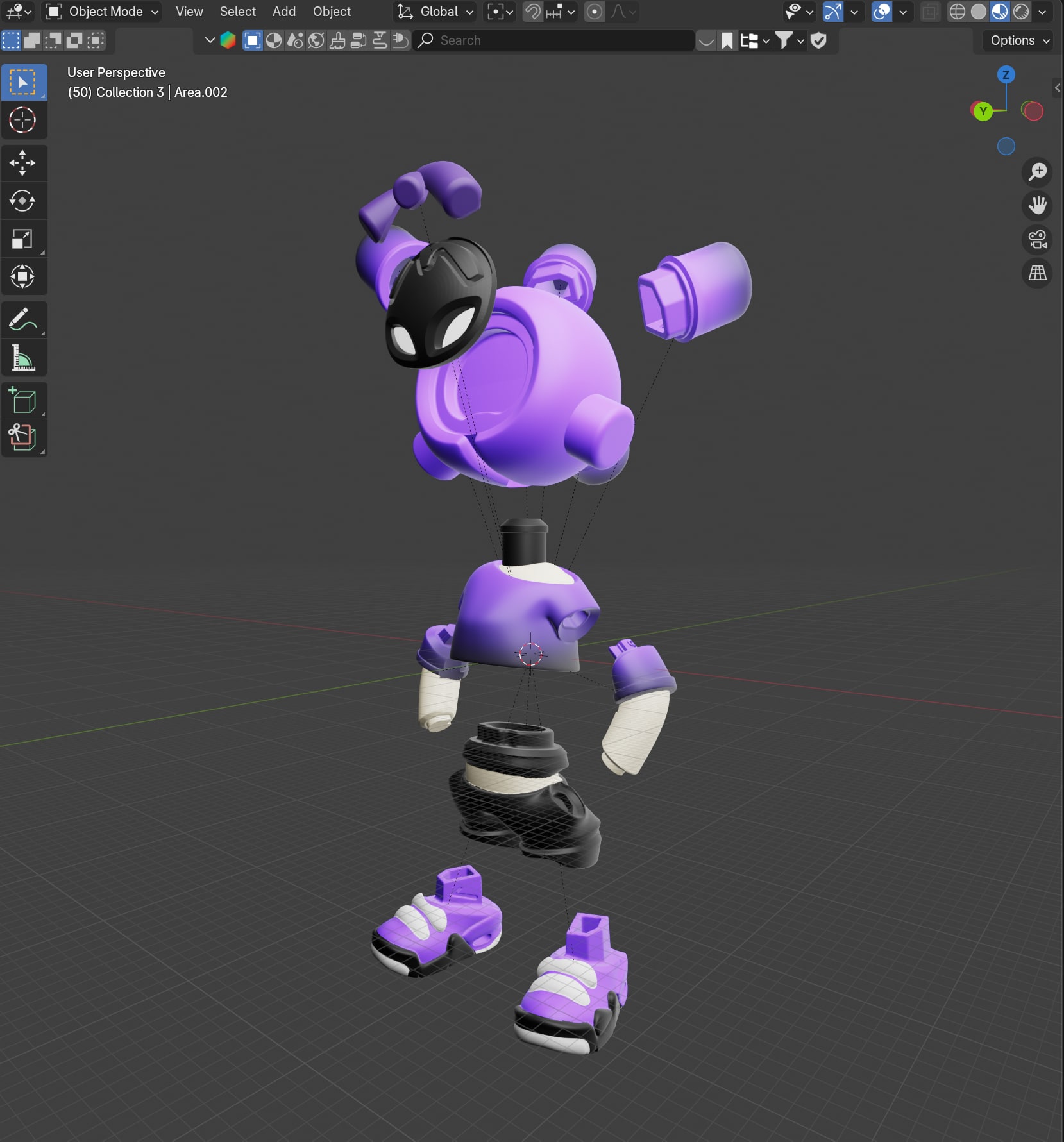
Exploded 3D model of an EQSO The Crew figure: the prototype uses exactly these parts.
Prototype vs pre-production sample
| Prototype | Pre-production sample | |
|---|---|---|
| Made | 3D-printed in resin | With the real moulds, at the factory |
| When | Before the moulds | After the moulds, before the run |
| Used to approve | Shapes, proportions, balance, details | Material, paint, assembly, final look |
| Typical timing | About 3 days of printing, plus corrections | About 2 weeks |
Both are essential: the prototype stops you paying for moulds for a character that cannot stand; the pre-production sample, approved in writing, stops you producing hundreds of pieces with a paint defect.
What to check on a prototype
- Does the silhouette read from every angle?
- Is the figure stable?
- Are the thin parts (fingers, antennae, accessories) thick enough?
- Do the joins between parts fall in the right places, where they will barely show?
- Does the size fit the planned box?
- And above all: do you want to keep it?
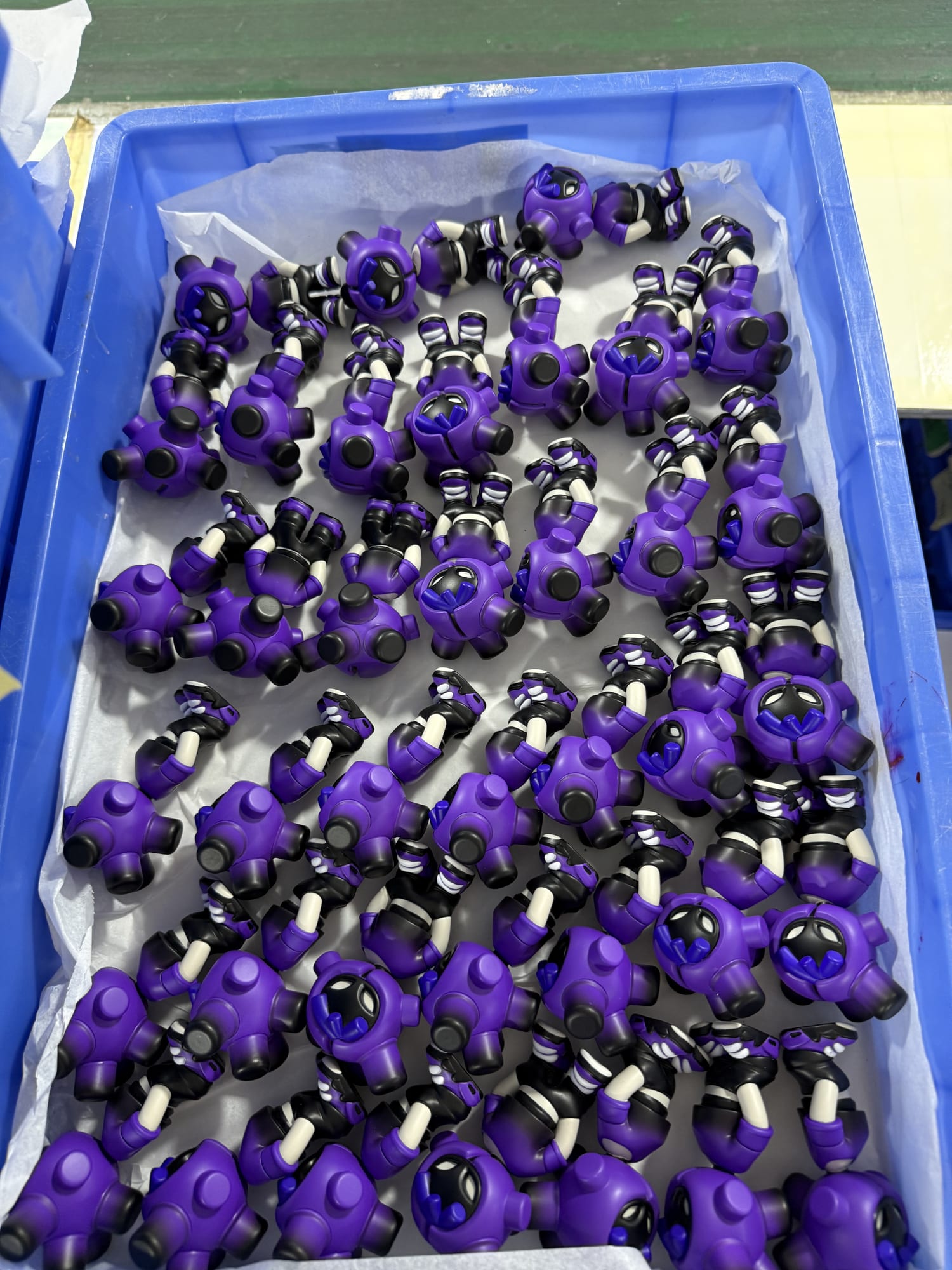
After the prototype come the moulds, then production: here, painted EQSO The Crew parts before assembly.
How long does it take and what does it cost?
Printing takes about 3 days, plus time for corrections: several versions may be needed for a complex character. The prototype is often invoiced with the tooling (the moulds). The biggest upstream cost is the production 3D modelling: €300 to €1,000 per working day, from 3 days for a simple character to more than 6 days for a complex one. Every cost line is detailed in our guide to custom figure costs.
Prototypes and crowdfunding
If you launch your project on a crowdfunding platform, a real prototype reassures backers far more than a render. Our first EQSO figures were 3D-printed resin prototypes, made before our Kickstarter campaign in February 2024. Our whole journey is in the guide on how to make your own art toy.
Frequently asked questions
What is a toy prototype?
It is a first piece 3D-printed in resin from the production 3D model. It is used to approve volumes, proportions, balance and details before the moulds are made.
How long does it take to make a prototype?
About 3 days of printing, plus time for corrections: several versions may be needed for a complex character.
How much does a figure prototype cost?
The prototype is often invoiced with the tooling. The biggest upstream cost is the production 3D modelling: €300 to €1,000 per day, from 3 days for a simple character to more than 6 days for a complex one.
What is the difference between a prototype and a pre-production sample?
The prototype is 3D-printed before the moulds, to approve the shapes. The pre-production sample comes out of the factory with the real moulds, just before the run, to approve material, paint and assembly.
Can we go straight to production without a prototype?
It is risky: a defect found after the moulds are made costs much more to fix. The prototype is a short step that prevents nasty surprises.
Related guides
Read next
How to make custom figures: the complete guide, from idea to factory
How to make custom figures in series: character design, 3D modelling, prototype, materials, moulds, production, quality control, packaging and shipping.
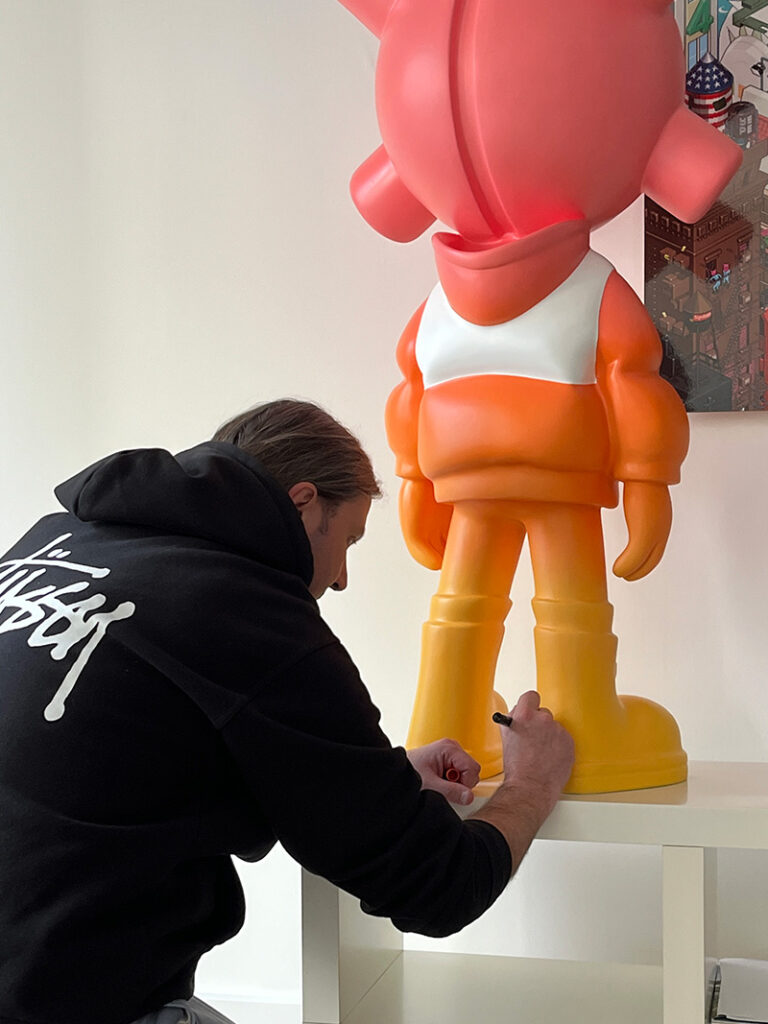
Figure moulds (molds): steel, metal or silicone, how to choose?
Figure moulds explained: steel for injection, metal for vinyl, silicone for resin. How each toy mold works, its lifespan, its cost and the right run size.
How long does it take to make a custom figure? Lead times step by step
How long does it take to make a custom figure? Lead time for each step (design, 3D, prototype, moulds, production, shipping) and planning tips.